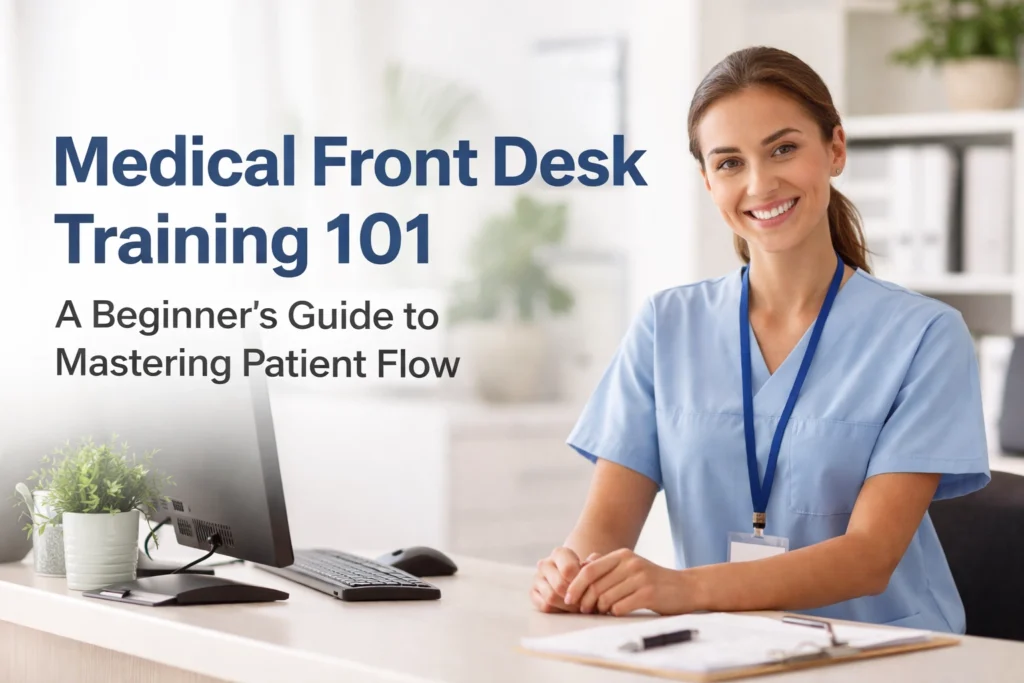
Let's be real: your front desk team is the first face patients see when they walk through your door. They're the first voice patients hear when they call. And whether we like it or not, that initial interaction sets the tone for the entire patient experience.
But here's the thing most clinic owners miss: a well-trained front desk doesn't just make patients feel welcome. It actually prevents billing headaches, reduces claim denials, and keeps your revenue cycle running smoothly. When your front desk captures the right information the first time, you're not chasing corrections later.
So let's break down exactly what it takes to turn your front desk into a patient-flow powerhouse: and how the right training can transform your entire practice.
Why Your Front Desk Is More Than Just a Greeter
Think of your front desk as mission control. Sure, they're saying "hello" and checking people in. But behind that friendly smile, they're also:
- ✅ Verifying insurance eligibility before services are rendered
- ✅ Collecting accurate demographic and contact information
- ✅ Securing co-pays and outstanding balances at time of service
- ✅ Managing appointment schedules to minimize gaps and no-shows
- ✅ Coordinating communication between patients and clinical staff
When any of these tasks slip through the cracks, it creates a domino effect. Wrong insurance info? Denied claim. Missed co-pay collection? Now you're chasing payments for weeks. Sloppy scheduling? Frustrated patients and lost revenue.
The good news? With proper training, your front desk team can handle all of this like pros.

The Core Skills Every Front Desk Team Member Needs
1. Communication That Builds Trust
Your front desk is having dozens of conversations every single day: on the phone, in person, and sometimes both at the same time. Clear, compassionate communication isn't optional; it's essential.
Here's what great front desk communication looks like:
- ✅ Greeting every patient warmly (even during the afternoon rush)
- ✅ Listening fully before responding: no interrupting or rushing
- ✅ Explaining processes clearly without overwhelming patients with jargon
- ✅ Staying calm and professional, even when patients are frustrated
When patients feel heard and respected, they're more cooperative, more likely to return, and more likely to refer friends and family. That's a win across the board.
2. Organization and Multitasking (Without Losing Your Mind)
The front desk is a high-traffic zone. Phones are ringing, patients are waiting, and the provider just asked for a chart. Your team needs systems in place to juggle it all without dropping the ball.
Key organizational skills include:
- ✅ Prioritizing tasks based on urgency
- ✅ Maintaining tidy, accessible patient records
- ✅ Following consistent check-in and check-out workflows
- ✅ Coordinating with clinical staff to keep appointments on track
A disorganized front desk creates bottlenecks that ripple through your entire day. An organized one? It keeps everything flowing smoothly.
3. Attention to Detail (Because Small Mistakes Cost Big Money)
Here's where front desk training directly impacts your bottom line. One wrong digit in an insurance ID number can tank an entire claim. A misspelled name can delay reimbursement for weeks.
Your team needs to understand that accuracy matters: a lot. That means:
- ✅ Double-checking insurance cards and entering data carefully
- ✅ Confirming patient information at every visit (addresses change, insurance changes)
- ✅ Reviewing forms for completeness before the patient leaves
This attention to detail at the front end saves your billing team hours of rework on the back end.
Patient Check-In: Setting the Stage for a Smooth Visit
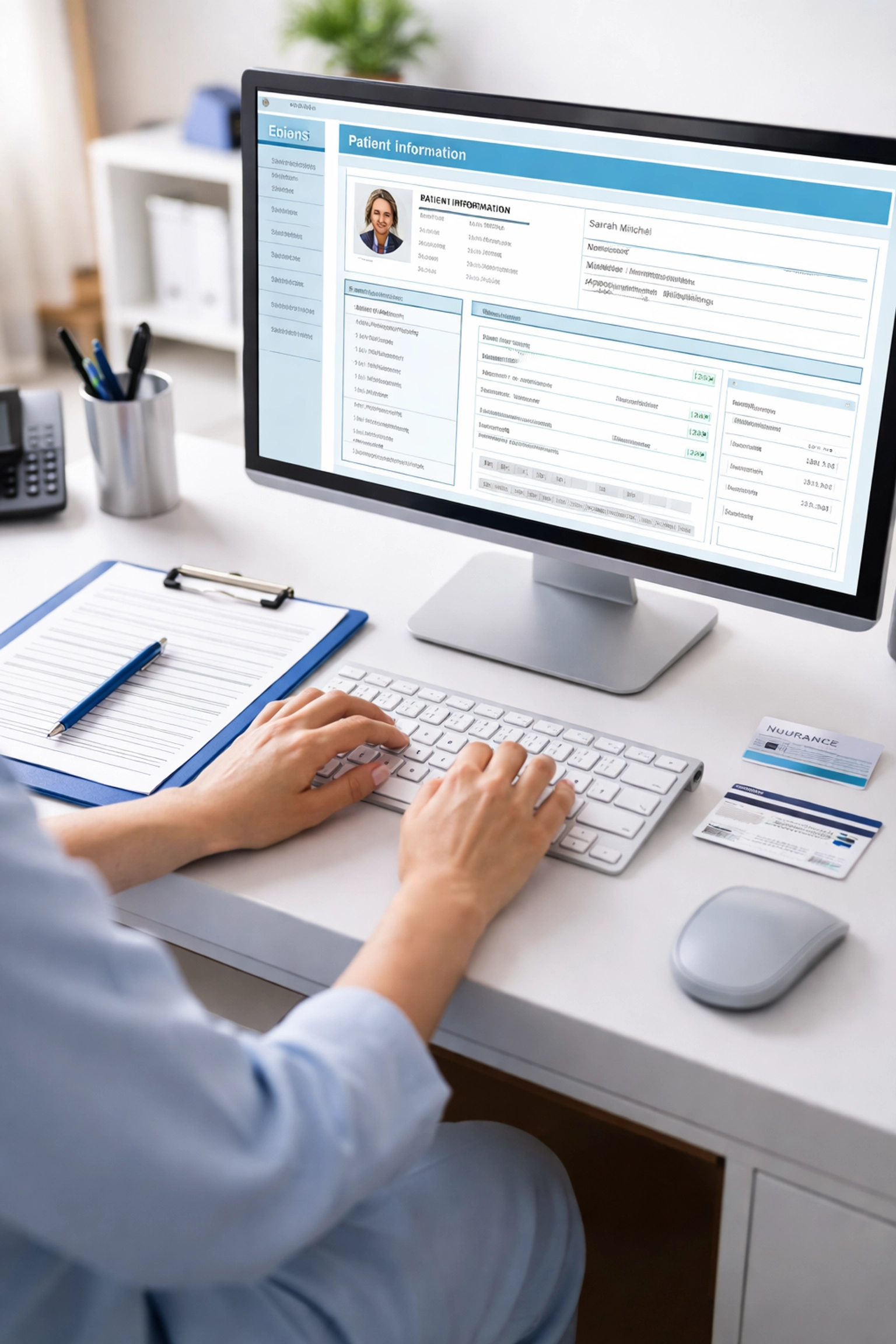
The check-in process is where most front desk magic (or chaos) happens. A streamlined check-in looks something like this:
- Greet the patient by name – It's a small touch that makes people feel valued.
- Verify demographics – Confirm address, phone number, and emergency contact.
- Check insurance eligibility – Run verification before the appointment, not after.
- Collect co-pays upfront – More on this in a minute.
- Scan IDs and insurance cards – Keep digital copies for your records.
- Review and update consent forms – Make sure signatures are current.
When your team follows a consistent check-in protocol, nothing slips through the cracks. Patients move through efficiently, and you capture everything you need for clean claims.
Why Collecting Co-Pays at the Door Matters
We get it: asking patients for money can feel awkward. But here's the reality: collecting co-pays at time of service is standard practice, and most patients expect it.
When you wait to bill co-pays later, you're:
- ❌ Adding administrative work for your billing team
- ❌ Increasing the chances of non-payment
- ❌ Extending your accounts receivable timeline
Train your front desk to collect with confidence. A simple script helps:
"Your co-pay for today's visit is $25. Will that be card or cash?"
No apologies, no awkwardness: just straightforward professionalism. Most patients appreciate the clarity.
Insurance Verification: The Unsung Hero of Clean Claims
If there's one skill that separates good front desk teams from great ones, it's insurance verification. Verifying coverage before the patient sees the provider prevents a whole mess of problems down the line.
Here's what thorough verification includes:
- ✅ Confirming the patient's policy is active
- ✅ Checking coverage for the specific services being rendered
- ✅ Identifying any authorization or referral requirements
- ✅ Noting co-pay, deductible, and co-insurance amounts
- ✅ Flagging any coordination of benefits situations
When your front desk catches issues before the appointment, you can address them proactively: whether that means getting prior auth, collecting a larger patient portion, or rescheduling if coverage has lapsed.
This one step alone can dramatically reduce your denial rate.

Phone Etiquette: Your Invisible First Impression
Not every patient walks through your door first: many call first. And that phone interaction shapes their perception of your entire practice.
Train your team on phone basics:
- ✅ Answer within three rings (or less)
- ✅ Use a friendly, professional greeting every time
- ✅ Place callers on hold politely: and don't leave them hanging
- ✅ Return messages promptly (same day when possible)
- ✅ Speak clearly and avoid rushing through information
A patient who has a great phone experience is already walking in with positive expectations. A patient who got put on hold for ten minutes and then disconnected? Not so much.
How Proper Training Reduces Billing Errors Downstream
Here's the connection many clinic owners don't see: your front desk and your billing department are deeply linked. When the front desk does their job well, billing becomes exponentially easier.
Think about it:
| Front Desk Action | Billing Impact |
|---|---|
| Accurate insurance entry | Clean claims, faster reimbursement |
| Co-pay collected at visit | Reduced A/R, fewer collection efforts |
| Eligibility verified | Fewer denials for coverage issues |
| Complete patient info | No rework or claim resubmissions |
Investing in front desk training isn't just about customer service: it's about protecting your revenue.
Building a Training Program That Actually Works
So how do you get your team up to speed? Here are a few approaches that deliver results:
- Role-playing exercises – Practice handling tricky patient scenarios in a low-stakes environment.
- Shadowing and mentorship – Pair new hires with experienced team members.
- Regular refreshers – Skills fade over time. Schedule quarterly training check-ins.
- Feedback loops – Give specific, actionable feedback rather than vague pointers.
- Cross-training – Teach team members multiple functions so they can cover gaps.
And don't underestimate the value of outside expertise. Sometimes a fresh perspective from professionals who specialize in medical office training can accelerate results faster than trying to build everything in-house.

Ready to Level Up Your Front Desk?
Your front desk team has more impact on your practice's success than most people realize. With the right training, they can create exceptional patient experiences and protect your revenue cycle from costly errors.
At ALS Integrated Services, LLC, we offer medical front desk training designed specifically for clinics like yours. We'll help your team master patient flow, insurance verification, co-pay collection, and all the little details that make a big difference.
Let's talk about how we can help your practice run smoother.
📞 Call Rachel at 513-597-1358
🌐 Visit us at www.alsintegratedsvc.com