

Let's be real: claim denials are the silent cash flow killer in every therapy practice. Whether you're running a busy PT clinic, an OT practice, or an SLP operation, you've probably looked at your aging reports and thought, "Where did all this money go?"
The answer? Straight into the denial pile.
Here's the good news: most denials are 100% preventable. We're talking about 60-90% of them. That's not a typo. With a few strategic tweaks to your billing workflow, you can stop the bleed and start recovering revenue that should have hit your bank account weeks ago.
Below are seven quick, actionable hacks that therapy practices are using right now to reduce denials, speed up payments, and keep their A/R aging under control. No fluff, just results.
Hack #1: Verify Insurance Eligibility Before Every Single Session
This is the low-hanging fruit that most clinics miss. Verifying eligibility before the patient walks in can reduce your denials by 25-30% immediately.
Why? Because payers love to deny claims for things like:
- Inactive coverage
- Changed plan details
- Exhausted visit limits
- Unmet deductibles
If you're waiting until after treatment to discover your patient's insurance lapsed last month, you're setting yourself up for a headache (and an awkward conversation with the patient about payment).
Quick Win: Set up a same-day or 24-hour pre-session eligibility check protocol. Most clearinghouses and billing software have automated tools for this: use them.

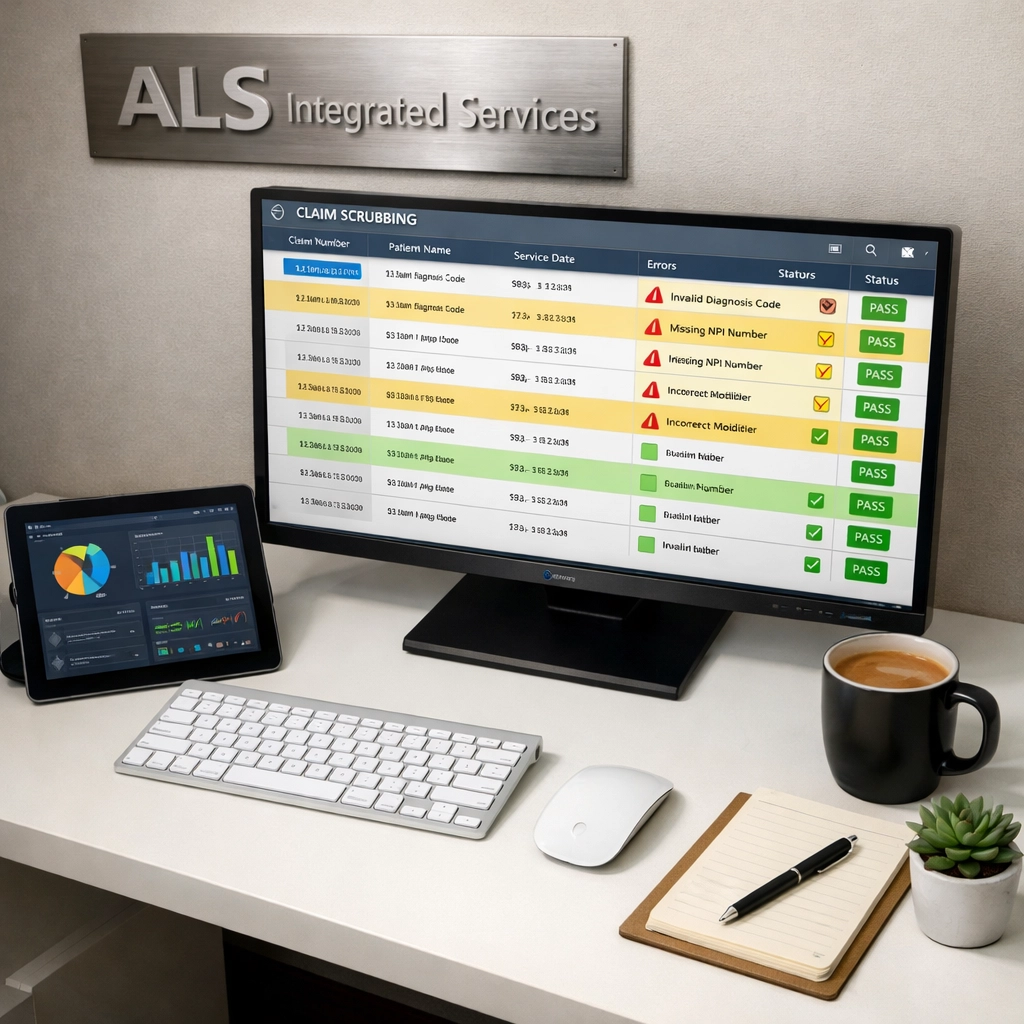
Hack #2: Use Automated Claim Scrubbing Before Submission
Human eyes miss things. It's just a fact. But claim scrubbing software? It catches 60-70% of coding errors before your claims ever reach the payer.
Automated scrubbing tools flag issues like:
- Outdated CPT codes
- Mismatched diagnosis codes
- Missing or invalid modifiers
- Incorrect place of service codes
Think of it as spell-check for your claims. You wouldn't send a professional email without running it through spell-check, right? Same concept.
Quick Win: If your billing software doesn't include claim scrubbing, invest in it. The ROI pays for itself in weeks: not months.
Hack #3: Link Every CPT Code to a Specific Diagnosis with Clear Medical Necessity
Payers are getting pickier about "medical necessity." If your documentation doesn't clearly explain why a treatment was needed and how it relates to the patient's diagnosis, expect a denial.
This is especially true for therapy claims. You need to show:
- The patient's functional limitations
- Objective measurements (ROM, strength, gait speed, etc.)
- Progress toward goals
- Why skilled intervention was required
Generic session notes like "Patient tolerated treatment well" won't cut it anymore. Your documentation needs to tell a story that justifies every code you bill.
Quick Win: Create a session note template that includes required medical necessity language. Train your therapists to document functional outcomes in every note.
Hack #4: Create and Track Prior Authorization Checklists
Missing a prior auth is one of the easiest ways to rack up denials: and one of the most preventable.
Different payers have different authorization requirements. Some need pre-approval for initial evals. Others require reauthorization after a certain number of visits. Some need it for specific CPT codes only.
If you're not tracking this systematically, you're playing denial roulette.
Quick Win: Build a simple spreadsheet (or use your practice management system) to track:
- Which payers require prior auth
- Which services need approval
- Authorization numbers and expiration dates
- Reauthorization deadlines
Set calendar reminders for expirations so you're never caught off guard.
Hack #5: Establish a Rapid Denial Response Protocol
Speed matters. The faster you respond to a denial, the better your chances of overturning it: by as much as 40-50%.
Here's a simple framework:
- Pause : Don't panic. Review the denial reason carefully.
- Diagnose : Identify the root cause (coding error, missing auth, documentation issue, etc.).
- Fix : Correct the underlying issue in your system so it doesn't happen again.
- Request Human Review : If the denial seems wrong, call the payer and request a supervisor review.
- File an Appeal : Submit formal appeals within 1-7 days with supporting documentation.
Assign a specific staff member to handle denials. Don't let them sit in a pile for weeks.
Quick Win: Set a rule: every denial gets reviewed and actioned within 7 days. No exceptions.
Hack #6: Conduct Monthly Denial Analytics and Pattern Tracking
You can't fix what you don't measure. If you're not tracking your denials by type and payer, you're missing critical insights.
Break down denials into categories:
- Authorization issues
- Coding errors
- Timely filing
- Medical necessity
- Eligibility/coverage
Then look for patterns. Are you seeing repeat denials from a specific payer? Is one therapist's documentation triggering more denials than others? Are you consistently missing prior auths for a certain service?
Once you identify the pattern, you can fix the system.
Quick Win: Run a monthly denial report. Share it with your billing team and front desk. Use it as a teaching tool, not a blame game.

Hack #7: Invest in Quarterly Staff Training on Coding, Payer Requirements, and Documentation
Here's a stat that should get your attention: practices with structured training programs reduce denial rates by up to 20%. Some even achieve 98% clean claim submission rates.
Payer rules change. CPT codes get updated. Documentation requirements shift. If your team isn't staying current, your denial rate will climb.
Quarterly training doesn't have to be fancy. It can be:
- A 30-minute lunch-and-learn on common denial trends
- A review of updated payer policies
- A documentation audit with feedback
- A coding refresher focused on therapy-specific CPT codes
Quick Win: Schedule your first training session this month. Pick one high-denial topic (like medical necessity documentation) and dive deep.
The Bottom Line: Small Changes, Big Impact
You don't need to overhaul your entire billing operation to see results. Start with one or two of these hacks and build from there. The practices that win at denial management aren't doing anything magical: they're just being intentional and consistent.
If you're looking at your A/R aging right now and feeling overwhelmed, we get it. Denials are frustrating, time-consuming, and honestly, they shouldn't be your problem to solve alone.
At ALS Integrated Services, LLC, we specialize in helping therapy practices (PT, OT, SLP) clean up their billing, reduce denials, and get paid faster: without adding more work to your plate. Whether you need a full billing overhaul or just want someone to handle your denial management, we've got you.
📞 Ready to stop losing money on denials? Visit us at alsintegratedsvc.com or check out more billing tips on our Insights page.
Let's get your cash flow back on track( together.)