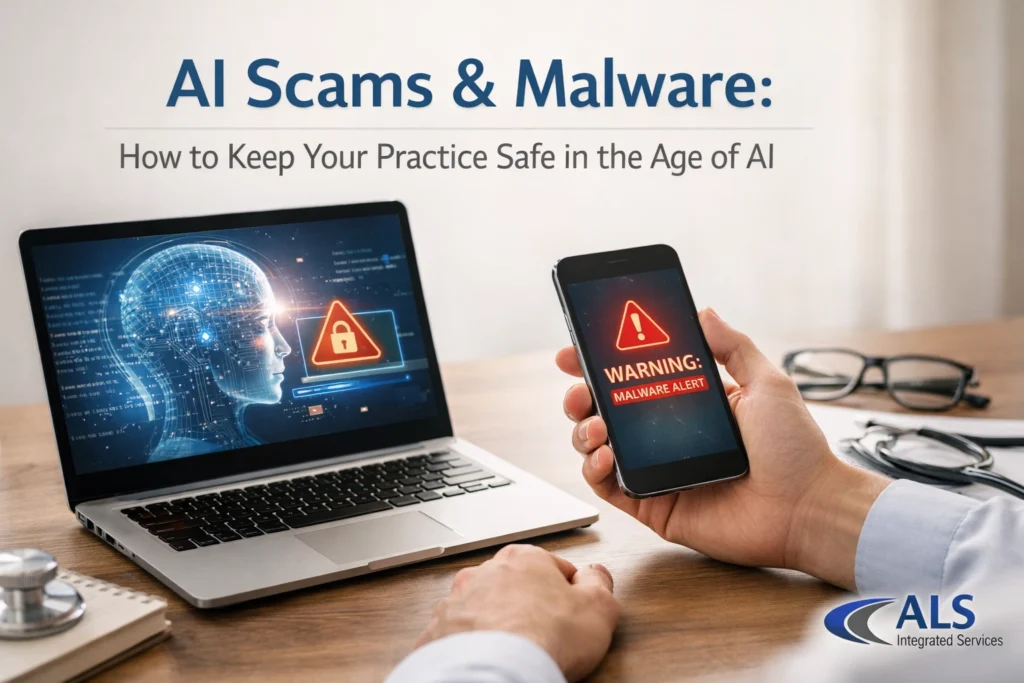
AI has changed the game for healthcare providers. From automating patient reminders to helping us streamline clinic operations, the efficiency gains are undeniable. We’ve seen AI significantly increase engagement, enhance workflows, and save hours of administrative time that would otherwise be spent on manual data entry. However, as the old saying goes, "with great power comes great responsibility."
The same technology that helps us provide better medical billing services is also being weaponized by bad actors. In 2025 alone, AI-driven scams grew by a staggering 1,210%. These aren't the clunky, misspelled "Nigerian Prince" emails of the early 2000s. Today’s threats are sophisticated, perfectly punctuated, and highly targeted.
At ALS Integrated Services, we believe that a strong defense is the best offense. Whether you are running a physical therapy clinic in Arizona, a multi-disciplinary practice in Pennsylvania, or a private school in Colorado, understanding the evolving digital landscape is critical to your survival.
The High Cost of a "Click"
When we talk about cybersecurity, we aren't just talking about a computer glitch. For a medical practice, a security breach is a direct threat to your HIPAA compliance status. HIPAA violations create significant financial, legal, and reputational risks.
Think about the fallout of a single successful phishing attack:
- System Remediation: The cost of hiring IT forensic experts to scrub your servers.
- Breach Investigation: Legal fees and administrative costs to determine exactly what was stolen.
- Patient Notification: The law requires you to notify patients if their Protected Health Information (PHI) is exposed. This is often the death knell for a clinic’s reputation in the local community.
Implementing therapy billing solutions that prioritize security is part of the puzzle, but the human element, your staff, is often the weakest link. This is why medical front desk training must include a deep dive into modern cyber threats.
EMR Safety: Know Your Software
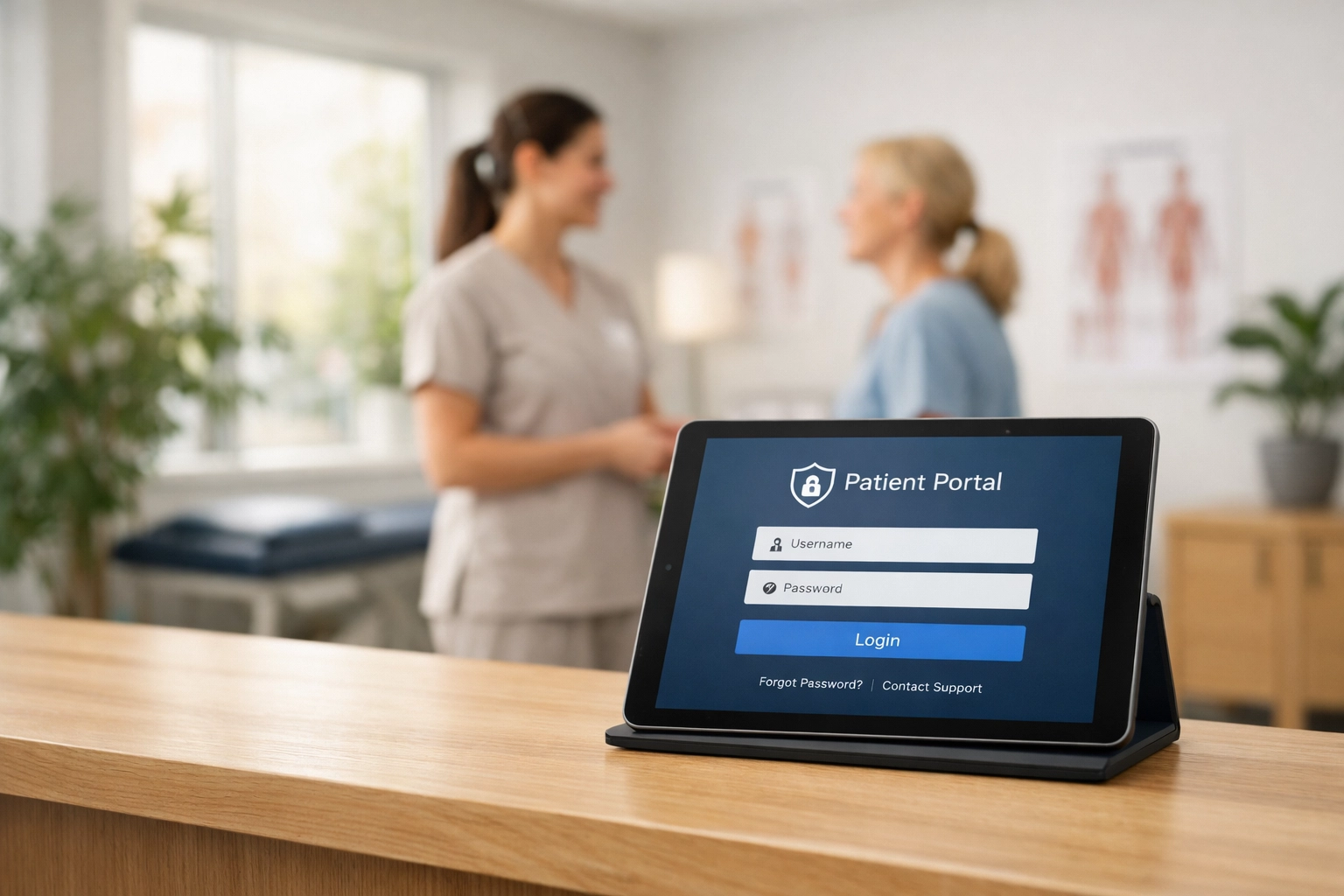
Your Electronic Medical Record (EMR) system is the heartbeat of your practice. Because most modern EMRs (like OptimisPT or WebPT) are cloud-based, they have specific security behaviors you should memorize.
The Golden Rule for Cloud EMRs: You will never have to click on a link to "download" an update. Cloud software updates happen on the provider's end. When you log in, the new version is simply there. If you see a pop-up or receive an email asking you to download a "security patch" for your cloud EMR, it is a scam.
Furthermore, you should never be "transferred" to an external, unfamiliar site to log in. If the URL in your browser bar doesn't look right, stop immediately.
For Server-Based EMRs: If your practice still uses a local server, updates are handled differently. However, you should never click on download links unless you have been explicitly notified by your supervisor or IT lead first.
Managing these technical nuances is part of why many clinics choose to outsource PT billing to experts who understand the intersection of technology and compliance.
Social Media: Not Just a Time-Waster, But a Risk
We recommend that staff access websites and social media sites for work purposes only. Beyond the productivity hit, social media is a prime breeding ground for AI-generated malware.
The most common trap currently circulating is the "Is this you?" scam. You receive a message from a "friend" (whose account has already been hacked) asking, "Is this you in this video? 😳" followed by a link.
These links often look legitimate, mimicking:
- YouTube or Facebook Video links
- Google Drive or Dropbox files
The Risk: The link leads to a fake login page designed to steal your credentials or triggers a silent malware download. Once they have your password, the scam automatically hijacks your account to send the same message to all your professional and personal contacts. In a medical setting, this could mean an attacker gaining access to your professional network or even your work email.
The Allure of "Free" AI Tools
We get it, everyone wants to see what they’d look like as a Pixar character or get a professional headshot for $0. But these "Free AI Tools" are often data-harvesting operations.
Be extremely wary of apps offering:
- "Free AI headshot generators"
- "See your future baby"
- "Turn yourself into an action figure"
Many of these apps require you to "Login with Facebook" or "Login with Google." This gives the app developers (and any attackers behind them) a gateway into your primary accounts. Some even install browser malware that logs your keystrokes, meaning they can see you typing in patient names, social security numbers, and billing codes.

Anatomy of a Phish: Your Verification Checklist
AI has perfected its grammar and spelling. You can no longer rely on "bad English" to spot a fake. To keep your practice safe, you need to train your team to stop and verify if an email or message:
- Creates extreme urgency: "Your account will be deleted in 2 hours!"
- Asks for login information: No legitimate company will ask for your password via email.
- Includes unexpected attachments: Especially ZIP files, HTML files, or Microsoft Office documents requesting you to "Enable Macros."
- Contains unfamiliar links: Hover your mouse over the link to see the actual destination URL before clicking.
- Requests payment or sensitive data: Always verify these requests via a phone call to a known, trusted number.
Before clicking, ask: Was I expecting this? Does this follow our standard operating procedure? If the answer is no, it’s a red flag.
Strengthening Your Practice Operations
Cybersecurity isn't just an IT issue; it’s a practice operations issue. Whether you are navigating the unique regulatory environments of Pennsylvania or the high-growth markets in Arizona and Colorado, your Policy & Procedure (P&P) manual must be updated to reflect these AI-driven risks.
Don’t be the clinic owner who has to send out an "Avoid our emails, we've been hacked" blast to your entire patient list. The damage to your brand is often more expensive than the actual data loss.
If you're feeling overwhelmed by the technical side of running a practice, you aren't alone. From navigating revenue cycle management to ensuring your front desk is the first line of defense against both billing errors and cyber threats, ALS Integrated Services is here to help.
Our complete guide to physical therapy medical billing explains the entire process of keeping your practice efficient, compliant, and profitable.
Action Items for Today
- Update your P&P manual: Include a section on AI scam prevention and social media usage.
- Train your staff: Use the verification checklist above in your next team meeting.
- Audit your EMR access: Ensure former employees are immediately removed and two-factor authentication (2FA) is enabled for everyone.
- Stay Informed: Keep an eye on our Insights page for the latest updates on compliance, technology, and medical billing.
Frequently Asked Questions
Q: Can AI help me spot scams?
A: Yes! Some advanced email filters use AI to detect patterns in phishing attacks. However, human intuition and strict policies are still your best defense.
Q: We use a Mac, are we safe from malware?
A: No. While PCs were historically targeted more often, modern AI-driven malware is increasingly platform-agnostic.
Q: What should I do if a staff member clicks a suspicious link?
A: Immediately disconnect the device from the Wi-Fi, change all practice passwords from a different clean device, and contact your IT professional to scan for malware.
Q: How often should we update our cybersecurity training?
A: At least quarterly. The landscape changes too fast for annual training to be effective.
Ready to protect your practice and maximize your revenue? Contact ALS Integrated Services today for a consultation on how we can help you secure your operations and thrive.