

Let's clear something up right away: Electronic prior authorizations aren't dead, they're now the law.
If you've been hearing conflicting information about ePA in 2026, you're not alone. Between vendor promises, AI hype, and confusing regulatory updates, therapy clinic owners are getting whiplash trying to figure out what's actually required and what it means for their operations.
Here's what you need to know: As of January 1, 2026, the CMS Prior Authorization Rule (CMS-0057-F) went into effect, mandating that payers offering Medicare Advantage, Medicaid, CHIP, and ACA exchange plans implement electronic prior authorization using FHIR-based APIs. Translation? The way you've been handling prior authorizations is about to change dramatically, and it's not optional.
But here's the part nobody's talking about: New technology doesn't eliminate the need for human expertise. It amplifies it.
What Actually Changed on January 1, 2026
The new CMS rule isn't just a suggestion, it's a fundamental restructuring of how prior authorizations work for therapy clinics. Here's what's different:
Mandatory Electronic Submission: Payers must now accept prior authorization requests electronically through FHIR (Fast Healthcare Interoperability Resources) APIs. No more faxing forms into the void and hoping someone processes them eventually.
Faster Turnaround Requirements: Payers now have strict deadlines, 7 calendar days for standard requests and 72 hours for expedited ones. This is a game-changer for therapy clinics that have historically waited weeks for authorization responses.
Enhanced Transparency: When a prior authorization is denied, payers must provide specific, structured reasons using standardized codes. Gone are the vague "not medically necessary" rejections with no explanation.
Direct EHR Integration (Coming 2027): Starting next year, certified EHR systems will allow you to submit prior authorizations directly from your clinical documentation system. No separate portals, no duplicate data entry.
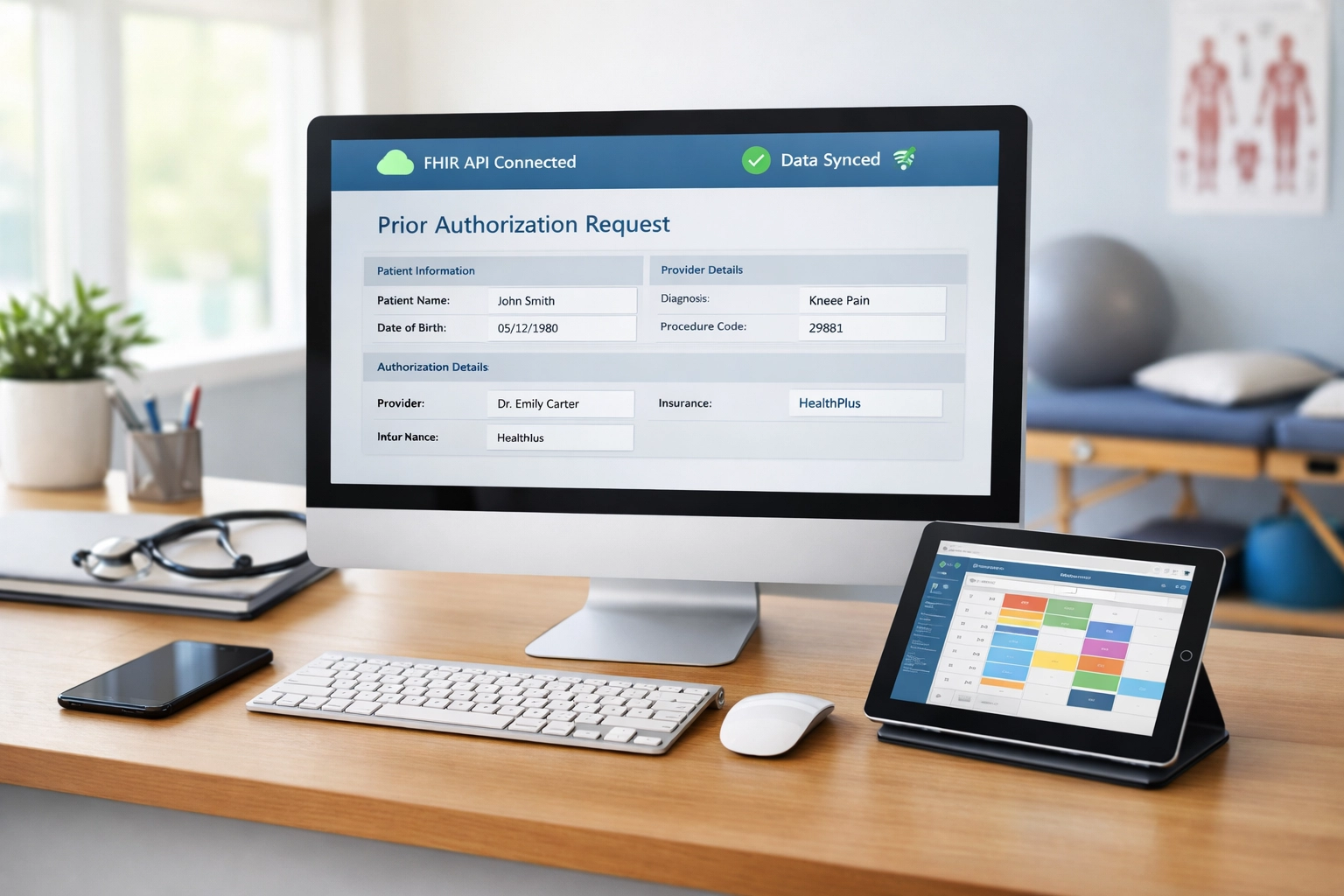
This sounds straightforward, right? Just upgrade your systems and let technology handle it.
Not quite.
Why This Isn't Just a Technology Problem
We've worked with dozens of therapy practices through the past year as they prepared for these changes, and we've seen a consistent pattern: Clinics that treat ePA as purely a tech upgrade are the ones struggling the most.
Here's why human oversight remains absolutely critical:
FHIR APIs Don't Write Clinical Justifications. Your EHR can transmit data electronically, but it can't craft a compelling clinical narrative that satisfies payer medical necessity requirements. When a physical therapy authorization request needs to demonstrate functional improvement justification, that requires clinical judgment, not just data transmission.
Structured Denial Codes Still Need Interpretation. Yes, you'll now receive standardized denial reasons. But understanding why a specific code was triggered, how to address it, and what documentation to include in your appeal requires expertise in both payer policy and clinical documentation standards.
Integration Creates New Failure Points. Every system connection is a potential breakdown point. API errors, authentication failures, mismatched data fields: these technical issues require someone who understands both the technology and the revenue cycle implications to troubleshoot effectively.
The 7-Day Clock Starts Immediately. Faster payer response times sound great until you realize that means less time to catch errors before they become denials. You need experienced eyes reviewing authorizations before they're submitted to maximize first-pass approval rates.
Where Human Expertise Matters Most in the ePA Era
At ALS Integrated Services, we've identified five critical areas where human billing expertise separates successful ePA implementations from disasters:
1. Pre-Submission Review and Optimization
Before any prior authorization hits the electronic system, experienced billers should be reviewing the request for completeness, accuracy, and compliance with specific payer requirements. AI can flag missing fields: it can't determine if your clinical documentation actually supports the requested number of visits.
2. Payer Policy Navigation
Different payers have different prior authorization requirements, even when using the same FHIR API structure. One Medicare Advantage plan might require functional outcome measures for manual therapy authorization while another focuses on frequency justification. Human billers maintain these payer-specific knowledge libraries.
3. Denial Analysis and Pattern Recognition
When you receive a structured denial code, the real value comes from recognizing patterns across your denials. Are specific providers consistently triggering certain denial codes? Is one payer rejecting particular CPT combinations? This pattern recognition drives systemic improvements: and it requires human analysis.

4. Complex Case Management
Routine authorization requests can flow through automated systems smoothly. But complex cases: patients with multiple comorbidities, services that straddle different benefit categories, or situations requiring medical director review: need experienced billers who know when and how to escalate appropriately.
5. System Monitoring and Quality Assurance
Electronic systems fail silently. An API connection can drop without anyone noticing until prior authorization deadlines are missed. Regular human monitoring catches these failures before they impact patient care or clinic revenue.
What Therapy Clinics Need to Do Right Now
The transition to mandatory ePA isn't something you can address later. Here are the immediate action steps we're recommending to therapy practices:
Audit Your Current State. Assess your existing prior authorization process honestly. How many requests are you submitting? What's your current approval rate? How long does the process take? You need baseline metrics to measure improvement.
Verify EHR Capabilities. Contact your EHR vendor and confirm they're compliant with the 2026 FHIR API requirements. Ask specifically about their roadmap for 2027's direct integration capabilities. If they're behind, you need to know now.
Document Payer-Specific Requirements. Create or update your payer policy manual to reflect each plan's prior authorization requirements. This isn't just about forms: it's about medical necessity criteria, documentation requirements, and appeal procedures.
Train Your Team: But Realistically. Your front desk staff and therapists need to understand how ePA affects them, but don't expect your clinical team to become billing experts. Clear role definition prevents gaps and redundancy.
Establish Monitoring Protocols. Create daily and weekly checkpoints to monitor authorization submission, response tracking, and exception handling. Electronic systems don't eliminate the need for oversight: they change what you're monitoring.
The "Modern But Human" Approach That Actually Works
The therapy clinics thriving through the ePA transition aren't choosing between technology and human expertise: they're strategically combining both.
At ALS Integrated Services, our approach leverages the efficiency of modern ePA systems while maintaining the quality assurance and strategic oversight that only experienced human billers provide. We use technology to handle routine transactions and data transmission, freeing our team to focus on high-value activities: complex case management, denial pattern analysis, payer relationship management, and continuous process improvement.
This isn't about resisting technology. It's about implementing it intelligently with proper human oversight.

We handle the entire ePA transition for therapy practices, including system integration coordination, staff training, ongoing monitoring, and quality assurance. Our team stays current on payer policy changes, tracks your authorization metrics, and proactively addresses issues before they impact your revenue cycle.
More importantly, we work with your clinical team rather than creating additional burdens. Your therapists focus on patient care while we ensure the administrative and billing aspects of prior authorization run smoothly.
The Bottom Line on ePA in 2026
Electronic prior authorizations aren't dead: they're mandatory, and they represent a significant operational shift for therapy clinics. The question isn't whether to adopt ePA systems, but how to implement them effectively.
The clinics that will succeed are those that view ePA as a tool that enhances: rather than replaces: skilled billing management. Technology handles the transmission; humans handle the strategy, interpretation, and continuous improvement.
If you're feeling overwhelmed by the ePA transition or concerned that your current billing setup isn't positioned for 2026's requirements, we can help. ALS Integrated Services specializes in providing therapy practices with modern, tech-enabled billing services that maintain the human expertise and oversight your revenue cycle requires.
Ready to discuss your ePA readiness? Contact ALS Integrated Services at (978) 369-5031 or visit alsintegratedsvc.com to schedule a confidential consultation. Let's ensure your practice is positioned not just to comply with the new requirements, but to thrive under them.