

You're doing everything right. Your clinicians are seeing patients. Your front desk is collecting copays. Your billing team is submitting claims on time. But when you check your bank account? Crickets.
If you've ever felt like you're running a charity instead of a healthcare practice, you're not alone. One of the biggest frustrations clinic owners face is the dreaded cash flow gap, claims are flying out the door, but payments aren't coming back in.
Here's the truth: submitting a claim and getting paid are two very different things. And if your revenue cycle has even one weak link, your clinic's cash flow suffers.
Let's dig into the nine most common reasons payments aren't landing in your account, and more importantly, how to fix them.
1. Coding Errors Are Silently Killing Your Revenue
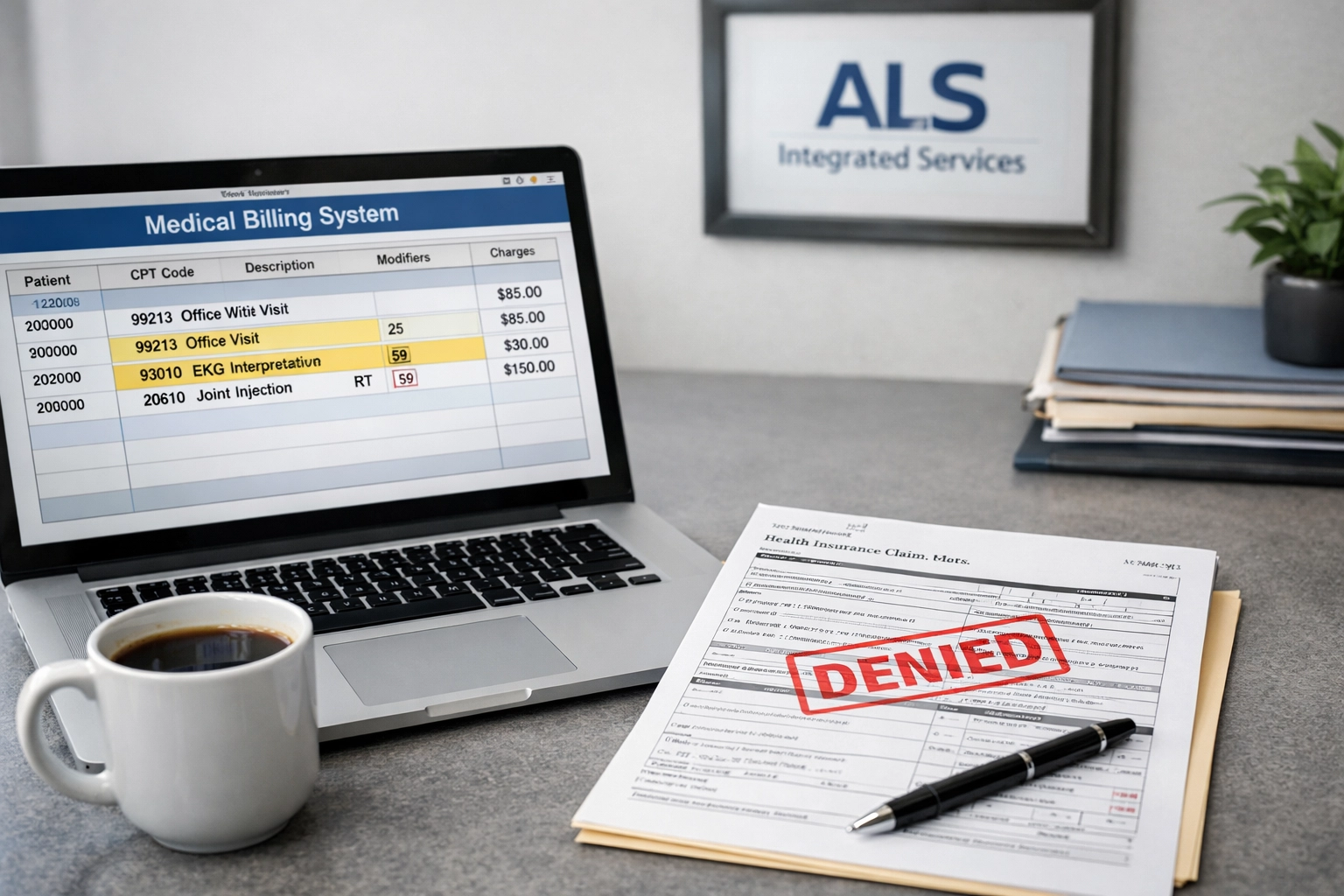
Even a single incorrect CPT code, missing modifier, or mismatched diagnosis code can trigger an automatic rejection. And here's the kicker: many practices don't catch these errors until weeks later when the denial hits.
The Fix:
Implement regular coding audits and invest in ongoing training for your billing team. Before any claim goes out, run it through a quality check. Establish a "two-pair-of-eyes" rule, one person codes, another reviews.
2. Incomplete or Incorrect Patient Information
You'd be surprised how often claims are denied simply because of a misspelled name, wrong date of birth, or outdated insurance ID number. These "clean-up" issues force your team to chase down information and resubmit, creating massive backlogs.
The Fix:
Verify everything at check-in. Train your front desk staff to confirm patient demographics and insurance details before every appointment, not just the first visit. A few extra minutes upfront saves hours of rework later.
3. Insurance Verification Isn't Happening (or It's Happening Too Late)
If you're verifying insurance eligibility after the patient walks out the door, you're setting yourself up for denials. Expired coverage, inactive policies, or incorrect insurance information won't magically fix themselves.
The Fix:
Verify eligibility 24-48 hours before each appointment. Set up automated reminders or use real-time eligibility tools integrated with your EHR. When coverage changes, update your system immediately.
4. Missing Prior Authorizations
Certain procedures, tests, and treatments require pre-approval from the insurance company. If your team submits claims without obtaining prior authorization, those claims get denied, no exceptions, no appeals.
The Fix:
Create a master list of services that require prior auth for each payer. Build workflows that flag these services during scheduling so your team secures approval before the patient is seen.
5. You're Missing Timely Filing Deadlines
Every insurance company has a deadline for claim submission, usually 30 to 90 days from the date of service. Miss that window, and your claim is dead in the water. No payment. No second chances.
The Fix:
Use claim tracking software to monitor submission deadlines. Assign clear accountability for timely filing, and set up alerts for claims approaching their deadline. Staff shortages are real, but they shouldn't cost you revenue.

6. No One Is Following Up on Submitted Claims
Submitting a claim doesn't mean the insurance company received it, processed it, or paid it. Without consistent follow-up, claims fall through the cracks, and your aging A/R grows into a monster.
The Fix:
Establish a systematic follow-up process. Check claim status every 7-10 days. Use clearinghouse reports and payer portals to track where claims are in the pipeline. Don't wait for denials to come to you, hunt them down.
7. Documentation Is Missing or Incomplete
Claims need supporting documentation, progress notes, evaluations, treatment plans, and medical necessity justifications. If the payer requests records and you can't provide them, your claim gets denied.
The Fix:
Train clinicians to document thoroughly at the time of service. Create checklists for required documentation based on service type. Before submitting claims, verify that all supporting documents are attached and complete.
8. Your Billing System Is Outdated or Glitchy
Manual processes, outdated EHR systems, and clunky workflows slow everything down. Claims sit in queues. Errors multiply. Staff gets frustrated. And your cash flow stalls.
The Fix:
Invest in modern billing technology with automated workflows and real-time claim scrubbing. Ensure your team is properly trained on the system, and schedule regular maintenance to prevent technical hiccups.
9. Workflow and Staffing Issues Are Creating Bottlenecks
Even with the best systems, if your team doesn't have clear roles, adequate staffing, or organized workflows, claims get stuck. One person out sick shouldn't bring your entire billing operation to a halt.
The Fix:
Define clear responsibilities for each stage of the billing process. Cross-train team members so coverage gaps don't cripple productivity. Use workload management tools to prevent backlogs and identify bottlenecks early.
10. It’s January: Deductibles Reset (and Patient Balances Spike)
This one catches even experienced therapy, mental health, and pediatric clinic owners off guard every year.
Your claims can be accepted (and even processed correctly) and you still won’t see meaningful payment for weeks—because the payer applies the allowed amount to the patient’s new deductible. In other words, insurance did its part, but the money is now the patient’s responsibility.
This is especially common with:
- High-deductible health plans (HDHPs)
- Families who changed plans at open enrollment
- Patients who met their deductible late last year and assume it “rolls over”
The cash-flow impact is real. January and February often create a “payment lag” where the clinic keeps delivering care, but the dollars shift from insurance A/R to patient A/R—unless we proactively collect.
Practical steps we can take (starting now):
- ✅ Verify remaining deductible at each visit in Jan/Feb (not just at intake)
Benefits change fast. Confirm deductible remaining, coinsurance, and visit limits before services are rendered. - ✅ Collect estimated patient responsibility up front
If the plan is applying to deductible, collecting at check-in protects cash flow and reduces awkward follow-up later. - ✅ Use cost estimates (and make them routine)
Provide a simple estimate based on your allowed amounts and typical visit frequency. Patients don’t need perfection—just clarity. - ✅ Update your patient financial policy language
Make it explicit that:- insurance “acceptance” isn’t the same as “payment,”
- deductibles reset annually, and
- balances may be due at time of service when applied to deductible.
- ✅ Set up payment plans and card-on-file (where permitted)
Give families a predictable way to pay. Confirm consent and comply with your state rules, payer contracts, and your merchant policies. - ✅ Improve statements + text/email reminders
Shorter cycles win. Send clearer statements, send them sooner, and pair with polite reminders so balances don’t quietly age out. - ✅ Track patient A/R separately from insurance A/R
This is huge for decision-making. When we separate the buckets, we can see what’s truly “stuck with payers” vs. what needs a patient collection workflow.
Why this matters: when deductibles reset, the clinic’s revenue doesn’t disappear—it shifts. The practices that stay steady are the ones that treat January like a financial workflow change, not a surprise.
Your Troubleshooting Checklist: Is Your Revenue Cycle Leaking Cash?
Use this quick checklist to spot red flags in your billing process:
✅ Are claims being submitted within 24-48 hours of service?
✅ Is insurance eligibility verified before every appointment (and are you re-checking deductible in Jan/Feb)?
✅ Do you have a system for tracking prior authorizations?
✅ Are coding audits happening regularly?
✅ Is someone following up on unpaid claims every 7-10 days?
✅ Are clinicians documenting fully at the time of service?
✅ Do you have clear accountability for each step of the billing cycle?
✅ Are you using cost estimates and collecting patient responsibility up front when plans apply to deductible?
✅ Are patient balances (patient A/R) being tracked separately from insurance A/R?
✅ Are you using technology to automate repetitive tasks?
If you answered "no" to more than two of these, your clinic is likely losing revenue to preventable billing issues.

Quick Wins: 3 Things You Can Do This Week
You don't have to overhaul your entire operation to see immediate improvements. Start here:
1. Run an Aging Report
Pull a report of all unpaid claims older than 30 days. Prioritize follow-up on the highest-dollar claims first. Even recovering a few large payments can make a noticeable difference.
2. Audit Your Front Desk Process
Shadow your front desk team for a day. Are they verifying insurance? Collecting accurate information? Catching eligibility issues early? Small tweaks here pay off big downstream.
3. Schedule a Coding Review
Pick your top 10 most-billed services and audit the codes. Are modifiers being used correctly? Are diagnosis codes linking properly? Fixing even one recurring error can unlock thousands in stuck revenue.
Stop Chasing Payments: Let ALS Integrated Services Handle It
Here's the reality: your clinic exists to care for patients, not to wrestle with insurance companies over unpaid claims. And if you're spending more time managing billing headaches than growing your practice, something's broken.
At ALS Integrated Services, LLC, we specialize in fixing revenue cycle leaks for therapy clinics, mental health practices, and pediatric offices. From claim submission to denial management to A/R follow-up, we handle the entire billing process so you can focus on what you do best: treating patients.
We're 100% US-based, we know the ins and outs of therapy billing, and we don't just submit claims and hope for the best. We track, we follow up, and we get you paid.
Ready to stop leaving money on the table?
Visit alsintegratedsvc.com or give us a call to learn how we can streamline your billing, boost your cash flow, and give you peace of mind.
Because claims going out should always mean payments coming in.