

You know that sinking feeling when you see a patient walk out before they even check in? Or when your phone rings for the seventh time in five minutes while two people are standing at the desk, visibly frustrated?
Front desk chaos isn't just stressful: it's expensive. Every confused patient, every missed call, and every insurance verification delay is costing your practice real money. And here's the thing: most front desk problems aren't actually about having too many patients or too few staff. They're about missing a simple, repeatable system that keeps the day from spiraling out of control.
The good news? You don't need to hire more people or invest in a complete practice overhaul. You need 15 focused minutes at the start of each day.
The Real Cost of Front Desk Chaos (It's Not What You Think)
When your front desk is scrambling, patients notice immediately. They're greeted by stressed staff, they wait longer than expected, and they leave wondering if your clinical care is as disorganized as your check-in process.
Here's what front desk chaos actually costs you:
✓ Patient attrition – Patients don't come back when the administrative experience is frustrating, even if they love their provider
✓ Revenue delays – Incorrect insurance information, missing authorizations, and data entry errors create claim denials that take weeks to resolve
✓ Reputation damage – Online reviews frequently mention front desk experiences more than clinical outcomes
✓ Staff burnout – High turnover at the front desk creates a vicious cycle of constant retraining and inconsistent service
✓ Missed appointments – When reminder calls don't go out or confirmations are missed, no-shows spike and your schedule has gaps you can't fill
The average medical practice loses roughly 15 minutes per patient due to inefficient intake processes. Multiply that by your daily patient volume, and you're looking at hours of wasted time every single week: time that could be spent seeing more patients or wrapping up earlier.

Why Most Front Desk "Fixes" Don't Work
Most practices try to solve front desk chaos by doing one of two things: hiring more staff or asking everyone to "just work harder." Neither works long-term.
More staff doesn't fix unclear processes: it just means more people working inefficiently. And asking burned-out team members to hustle harder without better systems is a recipe for resentment and turnover.
The real problem isn't capacity. It's clarity.
When your front desk doesn't have a clear daily routine, every task feels urgent, nothing gets prioritized, and small issues snowball into full-blown crises by lunchtime. Staff spend their day reacting instead of executing, and patients feel the chaos the moment they walk through the door.
The 15-Minute Daily Routine That Changes Everything
Here's the reality: a calm, efficient front desk starts before the first patient arrives. This 15-minute routine primes your team for a smooth day, catches issues before they become problems, and sets a professional tone that patients notice immediately.
Minute 1–3: Review Today's Schedule and Flag High-Priority Items
Pull up the day's appointments and quickly scan for:
- New patients who need extra check-in time
- Patients with outstanding balances or payment plan discussions
- Appointments requiring prior authorizations or referrals
- Time slots that need confirmation (patients who haven't responded to reminders)
This three-minute scan prevents surprises. Your team knows exactly where to focus attention and can proactively reach out to patients if something's missing.
Minute 4–7: Verify Insurance for Today's Appointments
Don't wait until patients arrive to discover their insurance has changed or their authorization expired. Spend four minutes running eligibility checks for patients scheduled that day: especially those with high-deductible plans or coverage changes noted in their file.
Catching insurance issues in the morning gives you time to contact the patient, adjust expectations, and collect payment upfront if needed. This protects your revenue and prevents awkward conversations at checkout.
Minute 8–11: Prioritize Follow-Up Tasks from Yesterday
Every front desk has a backlog: voicemails to return, faxes to process, insurance questions to resolve. Spend three minutes identifying the top three follow-up items that must get handled today, and assign them to specific staff members with deadlines.
This keeps your team from getting buried in low-priority tasks while critical patient calls or claim issues go unresolved. Clear priorities = less stress.
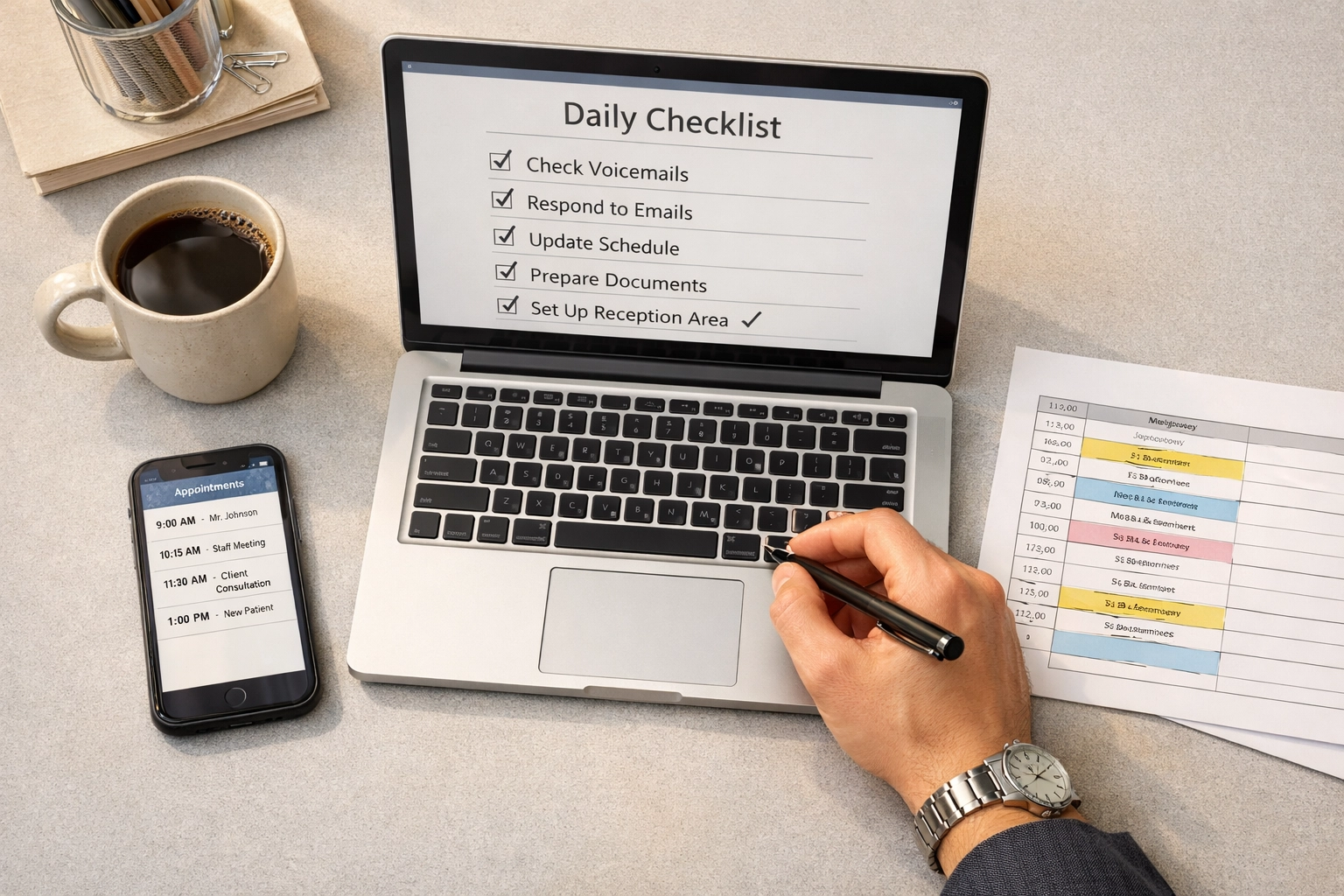
Minute 12–15: Set Up the Physical and Digital Workspace
This sounds basic, but it matters. Ensure:
- The waiting area is clean and welcoming
- Check-in tablets or clipboards are ready with working pens
- Phones are forwarded correctly and voicemail is cleared
- Computers are logged in and patient portal is accessible
- Payment processing systems are functional
A prepared workspace prevents technical delays, reduces patient wait time, and signals professionalism before anyone says a word.
How to Make the Routine Stick (And Stop Reverting to Chaos)
A 15-minute routine only works if it actually happens every day. Here's how to make it stick:
Assign ownership. One person leads the routine each morning. Rotate the responsibility weekly so everyone stays trained and engaged.
Use a checklist. Don't rely on memory. A simple printed or digital checklist ensures nothing gets skipped, even on hectic days.
Track the impact. Measure check-in times, patient complaints, and insurance denial rates before and after implementing the routine. When staff see the results, buy-in increases.
Adjust as needed. Every practice is different. If certain steps don't fit your workflow, modify them: but don't skip the routine altogether.
Beyond the Routine: Building a Front Desk That Runs Like Clockwork
The 15-minute routine is your foundation, but sustainable front desk efficiency requires a few additional systems:
Automate What You Can
Digital intake forms save roughly 15 minutes per patient and eliminate data entry errors. Automated appointment reminders via text or email reduce no-shows by keeping patients informed without adding to your staff's workload. Insurance verification software flags eligibility issues before patients arrive, so you're not scrambling at check-in.
Automation doesn't replace your team: it frees them to focus on the personal interactions that patients actually value.
Standardize Your Workflows
Create clear, written procedures for common front desk tasks:
- How to schedule different appointment types
- What to verify during check-in
- How to explain copays, deductibles, and high-deductible plans to patients
- When and how to escalate billing questions
- Scripts for handling upset or confused patients
When everyone follows the same process, patients get consistent service no matter who's working the desk. This reduces confusion, prevents errors, and makes training new staff exponentially easier.
Centralize Communication
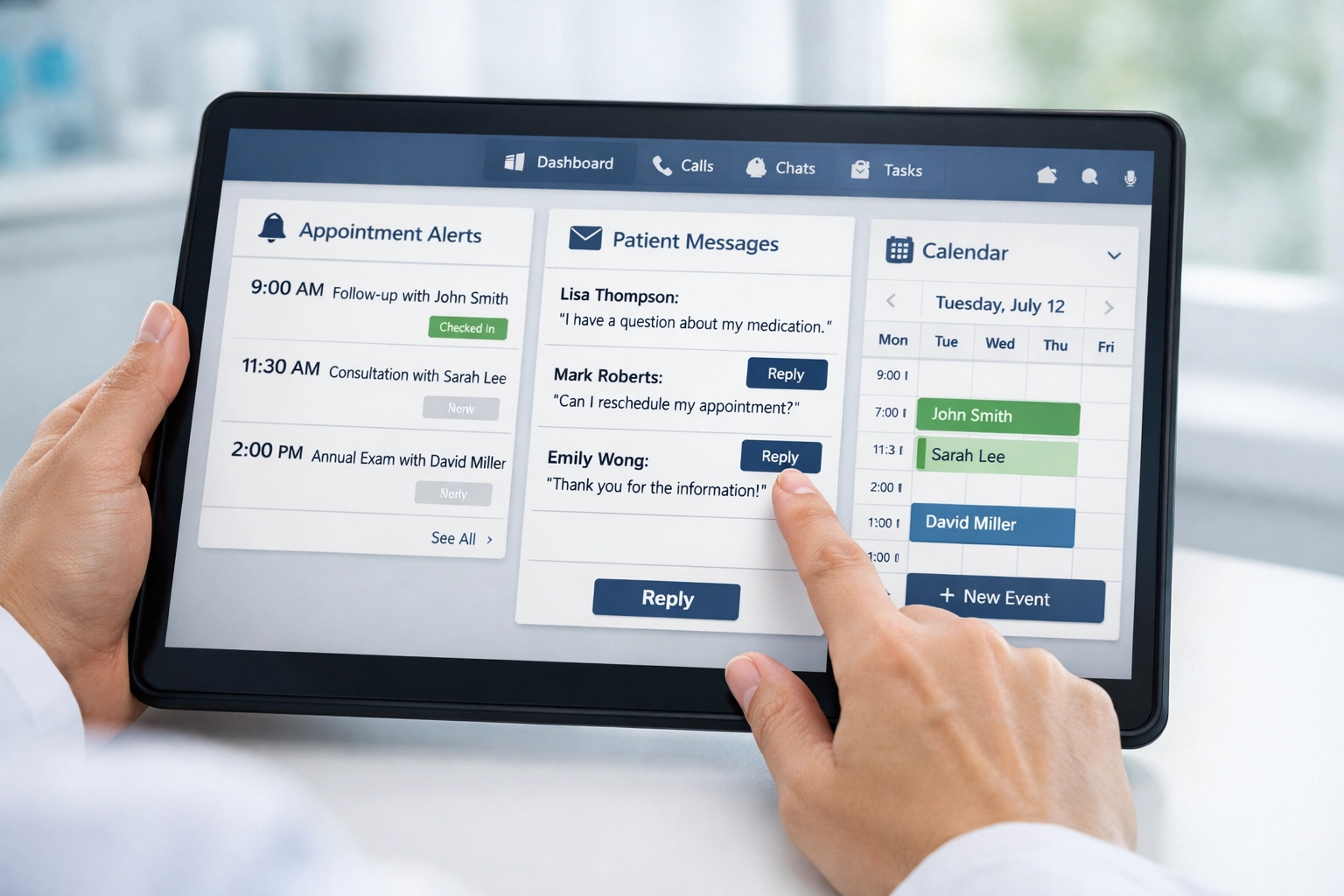
If your team is juggling phone calls, emails, faxes, patient portal messages, and text messages across multiple systems, chaos is inevitable. Consolidating communication into one platform allows staff to respond promptly, track conversations, and ensure nothing falls through the cracks.
Patient portals are particularly valuable: they reduce phone tag, cut call volume, and allow patients to handle routine requests (appointment changes, prescription refills, billing questions) on their own schedule.
Metrics That Matter: How to Know If Your Front Desk Is Actually Improving
You can't improve what you don't measure. Track these key metrics weekly to identify bottlenecks and celebrate progress:
✓ Average check-in time – How long does it take from arrival to being seated in the exam room?
✓ Call answer rate – What percentage of calls are answered live (not sent to voicemail)?
✓ No-show rate – Are patients forgetting appointments or not receiving reminders?
✓ Insurance verification accuracy – How often do patients arrive with incorrect or outdated insurance information?
✓ Payment collection rate at time of service – Are you collecting copays and balances upfront, or chasing payments later?
If any of these metrics are trending in the wrong direction, your 15-minute routine might need adjustment: or your team might need additional training.
When to Bring in Expert Support
Some practices nail the daily routine but still struggle with underlying workflow issues: unclear job roles, inefficient software, staff who need deeper training on insurance verification or patient communication.
That's where ALS Integrated Services comes in. We help therapy practices, medical clinics, and small healthcare businesses streamline their front desk operations with hands-on training, workflow audits, and administrative support that actually fits your practice.
We don't just hand you a manual and disappear. We work alongside your team to build systems that stick, troubleshoot real-time issues, and ensure your front desk becomes a strength: not a stress point.
Whether you need help training new staff, auditing your current workflows, or implementing better insurance verification processes, we're here to help.
Frequently Asked Questions
Q: What if my front desk staff resists adding a new routine?
Start small. Introduce the 15-minute routine as a two-week trial and track measurable improvements (check-in times, patient complaints, staff stress levels). When your team sees the routine actually reduces chaos instead of adding work, resistance usually fades.
Q: Can this routine work for multi-location practices?
Absolutely. Each location should run its own 15-minute routine at the start of the day, and practice managers can review daily checklists across sites to spot patterns or issues that need corporate-level support.
Q: What if we're already short-staffed and don't have 15 minutes to spare?
You can't afford not to spend 15 minutes preparing. The routine prevents hours of reactive scrambling throughout the day: it's a net time savings, not an added burden.
Q: How do we handle beginning-of-year deductible resets when patients are surprised by higher costs?
Build deductible conversations into your check-in process. Train your front desk to explain: "Your insurance has reset for the new year, so your deductible applies. Based on your plan, today's visit will cost approximately [amount]. We can process payment today or set up a payment plan if that's easier." Proactive communication reduces confusion and improves collections.
Ready to Stop Losing Patients to Front Desk Chaos?
Your front desk is the first and last impression patients have of your practice. When it's chaotic, patients leave: and they don't always come back.
The 15-minute daily routine is your starting point, but if you're ready for a front desk that runs smoothly, communicates clearly, and protects your revenue, let's talk.
ALS Integrated Services, LLC provides front desk training, workflow optimization, and administrative support tailored to therapy practices and medical clinics. We'll help you build systems that reduce stress, improve patient satisfaction, and keep your schedule full.
Visit us at alsintegratedsvc.com or call us to discuss how we can support your practice. Let's turn your front desk into your competitive advantage.