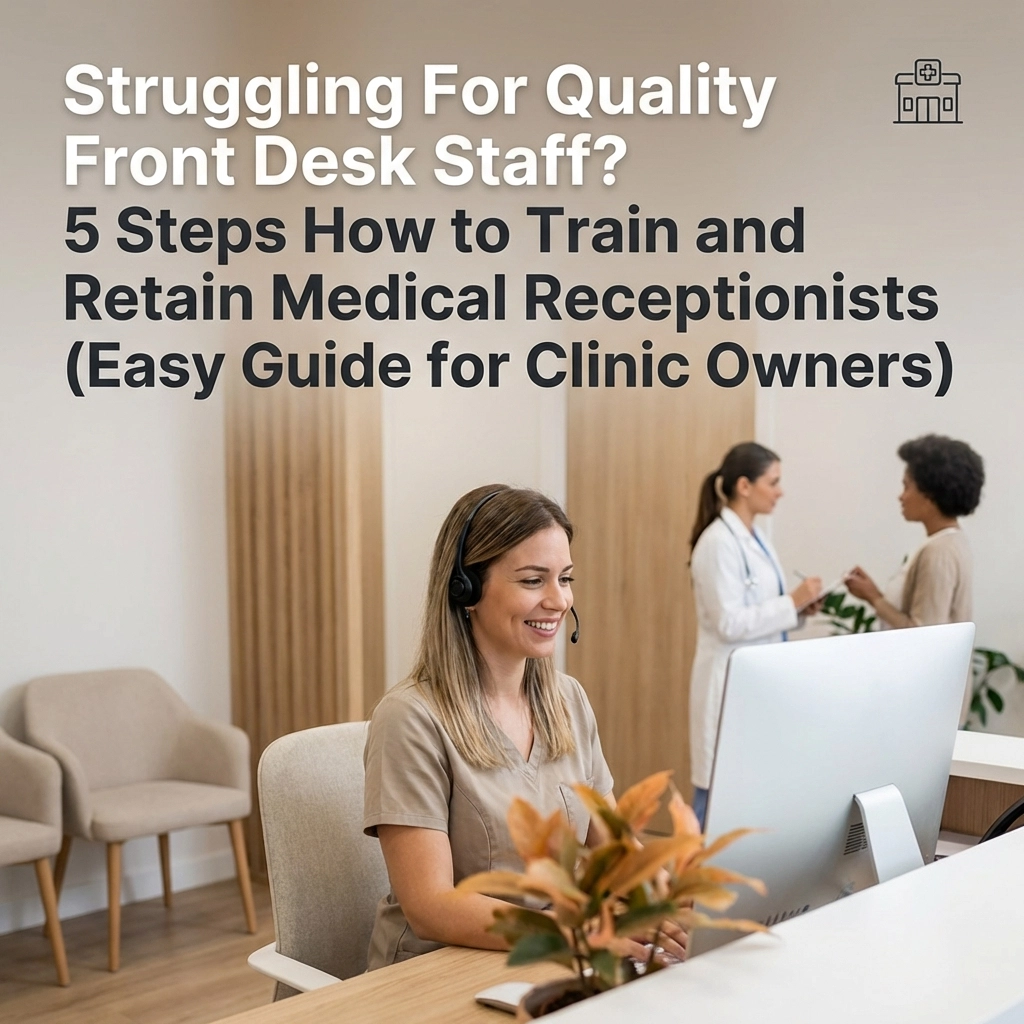
Your front desk staff are the first and last point of contact for every patient who walks through your doors. They set the tone for the entire patient experience, handle sensitive medical information, and directly impact your clinic's revenue through accurate billing and scheduling processes. Yet, finding and retaining quality medical receptionists remains one of the biggest challenges facing healthcare practices today.
The statistics tell the story: high-performing front desk teams can improve patient satisfaction scores by up to 40% and reduce billing errors by 25%. Conversely, poor front desk performance leads to frustrated patients, missed appointments, billing complications, and ultimately, lost revenue.
If you're struggling to build a reliable, skilled front desk team, you're not alone. The good news? With the right medical front desk training approach and retention strategies, you can transform your reception area from a potential weak point into your clinic's greatest asset.
Why Your Front Desk Team Makes or Breaks Your Practice
Your front desk staff wear many hats throughout the day. They're customer service representatives, data entry specialists, insurance coordinators, appointment schedulers, and often the first line of medical support for worried patients and families.
When your team excels in these roles, everything runs smoothly. Patients feel welcomed and valued, appointments flow efficiently, billing processes operate without hiccups, and your clinical staff can focus on what they do best: providing exceptional patient care.
However, when front desk operations struggle, the ripple effects impact every aspect of your practice. Patients become frustrated with long wait times or billing issues, staff morale drops due to constant problem-solving, and your reputation in the community can suffer.
The solution lies in comprehensive training and strategic retention efforts that position your front desk team for long-term success.
Step 1: Master Communication and Patient Interaction Skills
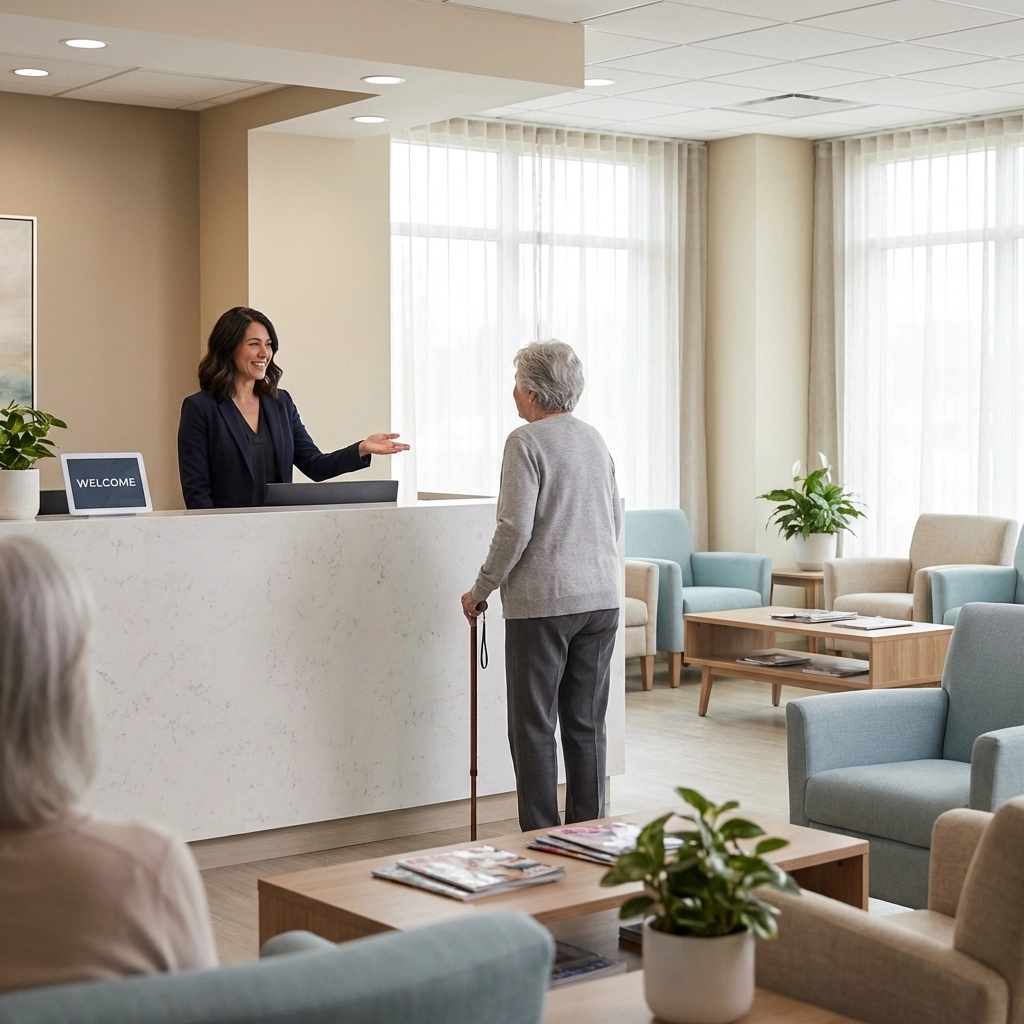
Effective communication forms the foundation of exceptional front desk performance. Your receptionists need to excel in both verbal and non-verbal communication to create positive first impressions and handle challenging situations with grace.
Verbal Communication Excellence
Train your staff to greet every patient with warm, professional language that immediately puts them at ease. This means using clear, concise speech at a moderate pace while avoiding confusing medical terminology that might overwhelm patients.
Key training components include:
✓ Professional greeting protocols – Consistent, friendly welcomes that reflect your practice's values
✓ Clear speech patterns – Speaking slowly enough for understanding without appearing condescending
✓ Medical terminology translation – Converting complex medical terms into patient-friendly language
✓ Active listening techniques – Giving patients full attention, asking clarifying questions, and repeating concerns back to ensure understanding
Non-Verbal Communication Mastery
Your team's body language speaks as loudly as their words. Train receptionists to maintain proper posture, make appropriate eye contact, and use facial expressions that convey empathy and professionalism.
Essential non-verbal skills include:
✓ Welcoming body posture – Facing patients directly with open, approachable positioning
✓ Genuine eye contact – Balancing attention between patients and necessary computer tasks
✓ Active listening cues – Nodding and responding appropriately to show engagement
✓ Professional appearance – Maintaining dress codes and personal presentation standards
Step 2: Implement Role-Playing Exercises and Detailed Feedback
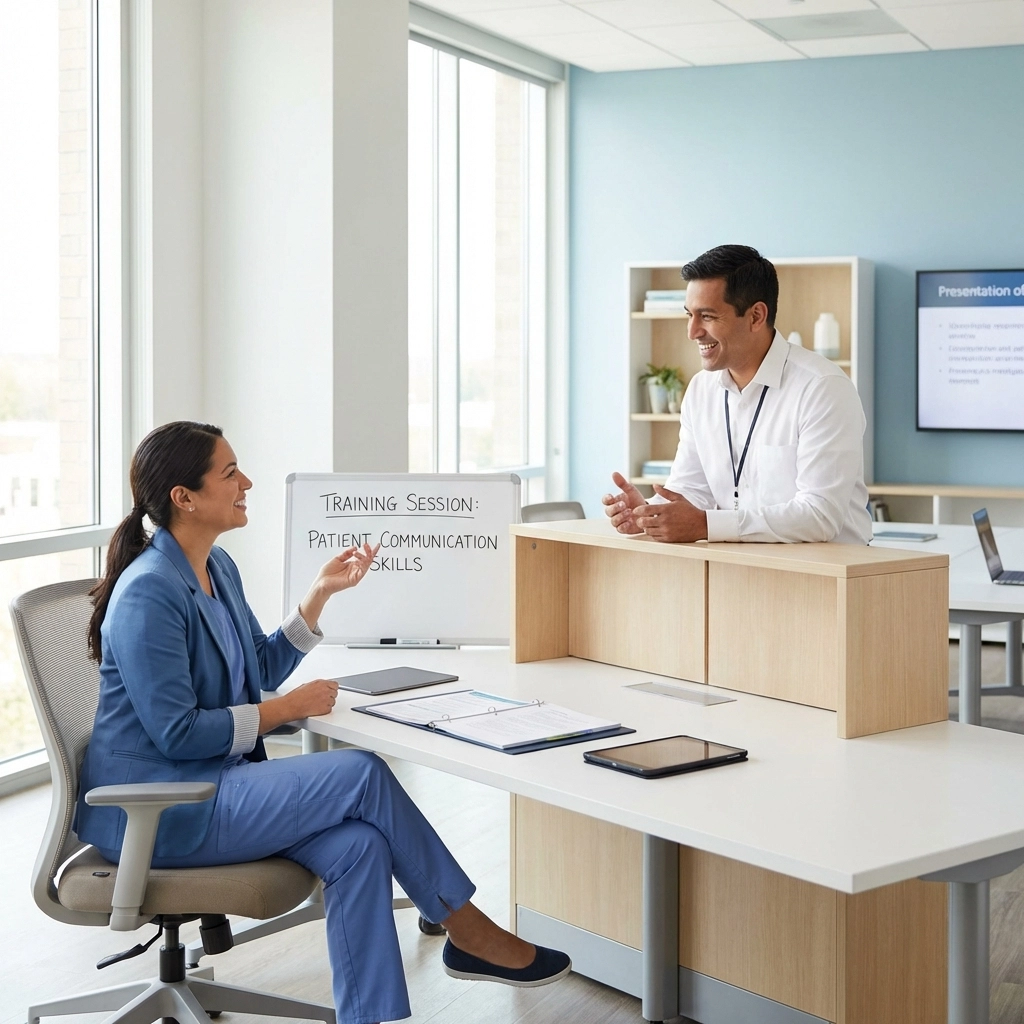
Practice makes perfect, especially when dealing with sensitive medical situations. Role-playing exercises allow your team to practice difficult scenarios in a safe environment while building confidence for real-world interactions.
Scenario-Based Training
Create realistic scenarios that your staff encounters daily. These might include handling frustrated patients with billing questions, explaining complex insurance requirements, or managing scheduling conflicts during busy periods.
Effective role-playing sessions cover:
✓ Difficult patient interactions – De-escalation techniques and empathy-building strategies
✓ Insurance verification challenges – Complex coverage questions and prior authorization issues
✓ Emergency situations – Protocols for medical emergencies or urgent scheduling needs
✓ Confidentiality scenarios – Proper HIPAA compliance in various situations
Constructive Feedback Systems
Regular feedback helps your team understand their strengths and identify areas for improvement. Rather than offering general comments, provide specific, actionable observations that lead to measurable improvements.
Implement feedback through:
✓ Regular performance observations – Scheduled check-ins to assess real-world performance
✓ Peer feedback sessions – Team members learning from each other's experiences
✓ Patient feedback integration – Using patient comments to identify training opportunities
✓ Performance metrics tracking – Measuring improvement over time with concrete data
Step 3: Ensure HIPAA Compliance and Data Management Proficiency
Medical receptionists handle protected health information (PHI) daily, making HIPAA compliance training absolutely critical. A single compliance violation can result in significant fines and damage to your practice's reputation.
HIPAA Training Essentials
Your medical front desk training program must include comprehensive HIPAA education that goes beyond basic overview to practical, daily application.
Core HIPAA training elements:
✓ PHI identification and protection – Understanding what constitutes protected information
✓ Conversation awareness – Ensuring private discussions remain confidential
✓ Screen and document security – Preventing unauthorized viewing of patient information
✓ Access controls – Proper login procedures and information sharing protocols
Data Entry and EHR Proficiency
Accurate data entry directly impacts billing efficiency, insurance processing, and patient care coordination. Train your team on your specific electronic health record (EHR) system with emphasis on accuracy and attention to detail.
Essential data management skills include:
✓ Accurate patient information entry – Double-checking details to prevent billing errors
✓ Insurance verification procedures – Confirming coverage and benefits before appointments
✓ Appointment scheduling accuracy – Proper coding and provider coordination
✓ Regular data auditing – Systematic checks for errors and inconsistencies
Step 4: Develop Administrative Flexibility and System Competency
Modern medical practices rely on various software systems and administrative processes. Your front desk team needs comprehensive training on all systems they'll use daily, plus the flexibility to adapt when procedures change.
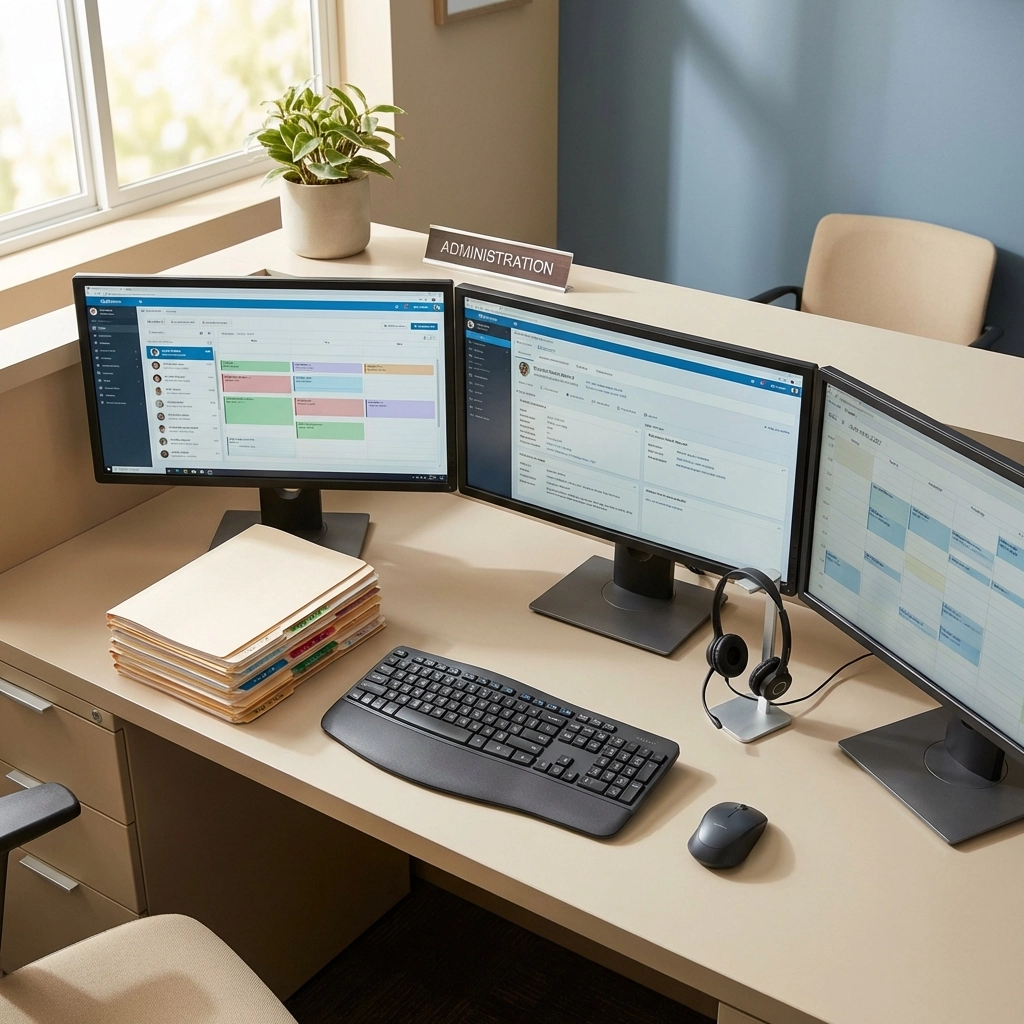
Multi-System Training
Today's medical receptionists work with appointment scheduling systems, billing software, insurance portals, and patient communication platforms. Ensure your team achieves competency across all relevant systems.
Key system training areas:
✓ Practice management software – Scheduling, billing, and patient communication features
✓ Insurance verification tools – Real-time eligibility checking and prior authorization systems
✓ Patient portal management – Helping patients access and navigate online resources
✓ Communication platforms – Phone systems, email protocols, and automated messaging
Process Flexibility and Problem-Solving
Train your team to think critically and adapt to unexpected situations. This flexibility prevents bottlenecks and ensures smooth operations even when standard procedures don't apply.
Build flexibility through:
✓ Cross-training initiatives – Teaching multiple roles to increase coverage options
✓ Problem-solving frameworks – Structured approaches to handling unusual situations
✓ Escalation procedures – Clear protocols for involving supervisors when needed
✓ Continuous learning mindset – Regular updates on new procedures and system changes
Step 5: Foster Team Cohesion and Retention
Retaining skilled front desk staff saves time and money while maintaining consistency in patient care. Building a positive work environment and supporting your team's professional growth creates loyalty and job satisfaction.
Building Team Culture
A strong team culture improves job satisfaction and reduces turnover. Invest in team-building activities and create opportunities for your front desk staff to develop positive working relationships.
Culture-building strategies include:
✓ Team meetings and communication – Regular opportunities for input and feedback
✓ Celebration of achievements – Recognizing exceptional performance and milestones
✓ Cross-department collaboration – Building relationships between front desk and clinical staff
✓ Professional development opportunities – Supporting continued education and skill building
Supporting Employee Wellness
Front desk work can be demanding, with constant patient interactions, multitasking requirements, and pressure to maintain accuracy. Supporting your team's wellness helps prevent burnout and maintains high performance levels.
Wellness support includes:
✓ Manageable workloads – Appropriate staffing levels and realistic expectations
✓ Break scheduling – Ensuring adequate rest periods during busy days
✓ Stress management resources – Training on handling difficult situations and managing workplace stress
✓ Competitive compensation and benefits – Fair wages and comprehensive benefits packages

How ALS Integrated Services Can Help
Developing and implementing comprehensive medical front desk training requires significant time and expertise. Many clinic owners find themselves overwhelmed trying to balance patient care responsibilities with staff training needs.
At ALS Integrated Services, LLC, we specialize in medical front desk training programs tailored to your practice's specific needs. Our training approach covers all five steps outlined above, with customized content that reflects your unique workflows, systems, and patient population.
Our training services include:
✓ Customized training curricula – Programs designed for your specific practice requirements
✓ Ongoing support and coaching – Continued guidance beyond initial training sessions
✓ Performance monitoring systems – Tools to track improvement and identify additional training needs
✓ HIPAA compliance expertise – Specialized knowledge of healthcare privacy regulations
Don't let front desk challenges hold your practice back. Contact Rachel at 513-597-1358 to learn how our medical front desk training services can transform your reception team into your practice's greatest asset.
Take Action Today
Building a skilled, reliable front desk team doesn't happen overnight, but with the right training approach and commitment to retention, you can create a reception area that enhances rather than hinders your practice's success.
Start by assessing your current team's strengths and identifying specific areas for improvement. Then, implement these five steps systematically, focusing on one area at a time to avoid overwhelming your staff.
Remember, investing in your front desk team's success is investing in your entire practice's future. When your receptionists excel, your patients notice, your staff appreciates the support, and your bottom line reflects the improved efficiency.
Ready to take your front desk operations to the next level? Visit ALS Integrated Services to explore our comprehensive training solutions, or call Rachel directly at 513-597-1358 to discuss your specific needs.
Your patients: and your practice: deserve exceptional front desk service. With the right training and support, you can deliver exactly that.