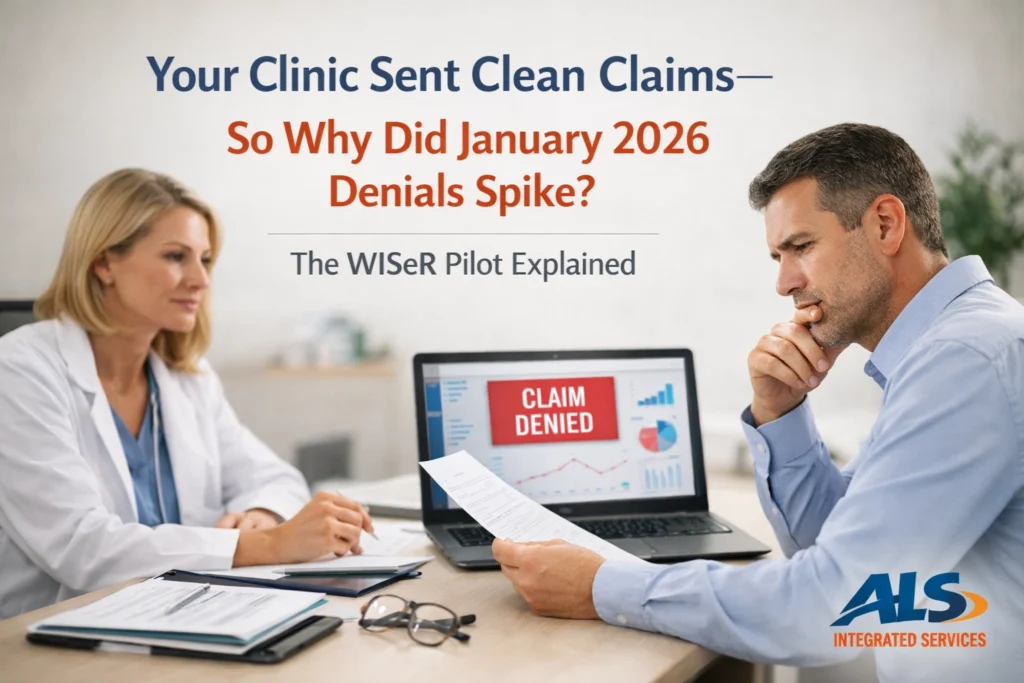
You did everything right. Your documentation was thorough, your codes were accurate, and your claims went out clean. Then January 2026 hit, and your denial rate exploded.
If this sounds familiar, you're not alone: and you're not losing your mind. What happened in January 2026 wasn't about your billing getting worse. It was about payers changing the entire game without sending you the new rulebook.
The Perfect Storm: What Actually Happened in January 2026
January 2026 became a collision point for three massive healthcare industry shifts happening simultaneously. Clean claims that would have sailed through in December 2025 suddenly bounced back with denial codes you'd never seen before.
The Medicare Advantage Exodus
Approximately 2.9 million Medicare Advantage beneficiaries lost their existing plans when major insurers like UnitedHealthcare and Humana exited over 300 counties. Patients walked into your clinic in January with new insurance cards, new provider networks, and often zero awareness their coverage had fundamentally changed.
The result? Claims submitted to terminated plans were automatically rejected. When your billing team resubmitted to the new plans, they discovered missing prior authorizations, referral requirements for HMO networks, and eligibility verification issues that hadn't existed the month before.

AI Adjudication Without Human Review
Payers dramatically accelerated their deployment of artificial intelligence for claim processing in 2026. What previously required manual review now faces auto-denial in seconds for missing data elements, subtle coding nuances, or documentation gaps: often without any human involvement whatsoever.
This isn't theoretical. UnitedHealthcare is currently facing litigation over its "nH Predict" algorithm, which allegedly systematically denies claims that are later overturned on appeal. The problem? Most providers don't have the time or resources to appeal every questionable denial.
Payer-Specific Rules Beyond CPT and ICD Guidelines
Here's the kicker: meeting standard CPT and ICD-10 guidelines is no longer enough. Payers now enforce proprietary medical policies requiring precise language, specific phrases, and clinical indicators aligned with their internal rules: rules that aren't published in any coding manual.
Small administrative details that once triggered a simple correction request now result in full denials as a deliberate cost-containment strategy.
Enter WISeR: The Pilot Program Nobody Warned You About
On January 1, 2026, the Center for Medicare and Medicaid Innovation (CMMI) quietly launched the Wasteful and Inappropriate Service Reduction (WISeR) pilot program. The goal? Reduce unnecessary healthcare spending by identifying and preventing "inappropriate" services before they're rendered or reimbursed.
Sounds reasonable in theory. In practice, it created a cascading effect across the entire payment landscape.
What WISeR Actually Does
WISeR gives participating payers expanded authority to implement stricter prior authorization requirements, enhanced documentation review, and more aggressive claims scrutiny for services deemed high-risk for overutilization. This includes:
✓ Imaging services (MRI, CT scans, advanced diagnostics)
✓ Outpatient surgery and procedures
✓ Infusion services and specialty medications
✓ High-cost durable medical equipment
✓ Certain therapy services exceeding threshold visit counts
The timing wasn't coincidental. WISeR launched simultaneously with payers dramatically broadening their prior authorization requirements: creating more administrative touchpoints where denials could occur.
The Documentation Trap
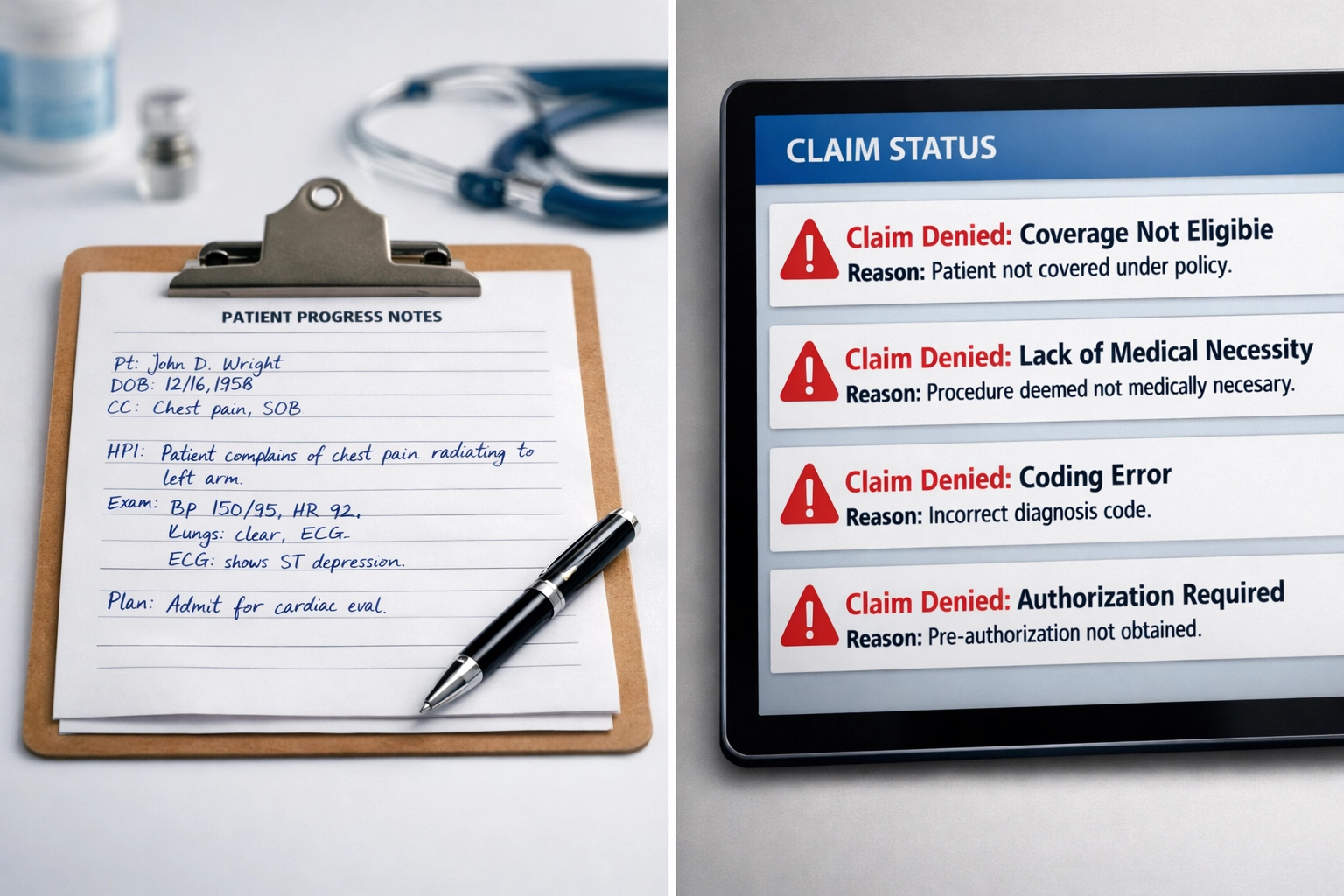
WISeR compliance requires documentation that proves medical necessity using the payer's specific terminology and clinical indicators. Your standard progress note: perfectly compliant with professional guidelines: may not contain the exact phrases or data points the payer's algorithm is scanning for.
And here's the real problem: these requirements change frequently, vary by payer, and aren't always clearly communicated to providers.
The Special Needs Plan Complexity
Chronic Conditions Special Needs Plans (C-SNPs) expanded by an estimated 42% in 2026. These plans require ICD-10 coding that precisely matches their covered chronic conditions. Submitting a general diagnosis code instead of the specific condition-linked code triggers automatic denials or audits: denials that cannot be overturned even through appeals.
Your patient qualifies for coverage. Your treatment is appropriate. But if your documentation uses "diabetes" instead of the plan's required "diabetes with chronic kidney disease, stage 3," your claim is denied.
The Hidden Silver Lining (That Most Clinics Never See)
Here's something the denial letters don't tell you: 80.7% of appealed denials are overturned. The catch? Only 11.5% of denials are actually appealed.
Why so few appeals? Because most billing departments are drowning in volume and don't have the resources to systematically track, research, and appeal every questionable denial: especially when payer-specific rules are constantly shifting.
This gap reveals the real issue: January 2026 denials largely reflected administrative friction and payer automation errors, not clinical inappropriateness. But without dedicated expertise to identify which denials are worth fighting, providers simply write off revenue they're legitimately owed.
Why Manual Oversight Matters More Than Ever
Automated billing systems and AI-driven clearinghouses can submit claims. They can't:
✓ Monitor mid-year payer policy changes that invalidate previously approved procedures
✓ Identify when a denial contradicts the payer's own published guidelines
✓ Recognize patterns indicating a payer system error versus a legitimate denial
✓ Navigate the nuances of WISeR documentation requirements by payer and service type
✓ Proactively adjust documentation workflows before claims are denied
This is where human expertise becomes your competitive advantage. WISeR and the January 2026 changes prove that staying ahead of payer policies isn't a quarterly project: it's a daily operational necessity.

How ALS Integrated Services Prevents Revenue Loss
We monitor these changes manually because automation alone can't protect your revenue in the current landscape. Our team actively tracks:
Daily Payer Policy Updates: We review bulletins, provider newsletters, and policy changes from major payers to identify new documentation requirements before they impact your claims.
WISeR Compliance Monitoring: We stay current on which services require enhanced documentation under the WISeR pilot and adjust our review processes accordingly.
Denial Pattern Analysis: We examine denial trends across our client base to identify systemic payer issues versus provider-specific problems: so we can address the root cause, not just symptoms.
Appeal-Worthy Identification: We systematically identify which denials warrant appeals based on payer-specific overturn rates and potential recovery value.
Proactive Documentation Coaching: When we spot emerging payer trends, we work directly with your clinical team to adjust documentation before claims are submitted.
This isn't about perfection: it's about having a partner who's watching the game change in real time and adjusting your strategy accordingly.
What You Can Do Right Now
If January 2026 caught you off guard, you're not behind: you're exactly where most practices are. Here's how to stabilize:
-
Review Your January Denials by Category: Group denials by reason code to identify patterns. Are you seeing eligibility issues? Documentation deficiencies? Missing prior authorizations?
-
Verify Patient Eligibility Before Every Visit: Even for established patients. Coverage changes happen mid-month without notice.
-
Document Using Payer-Specific Language: If a payer's medical policy uses specific terminology for medical necessity, mirror that language in your clinical notes.
-
Don't Accept Vague Denial Codes: If a denial doesn't clearly explain what's missing, request specific documentation requirements in writing.
-
Consider Expert Partnership: If your billing team is spending more time fighting denials than preventing them, it's time to evaluate whether manual oversight from a specialized partner makes financial sense.
The Bottom Line
January 2026 wasn't about your team suddenly forgetting how to bill. It was about an industry-wide shift toward payer automation, stricter documentation enforcement, and policy changes that happened too fast for most practices to absorb.
The clinics thriving right now aren't necessarily billing better: they're monitoring changes better. They have systems and partners in place to catch policy shifts before they become denial trends.
If your denial rate spiked and you're not sure why, we can help you find the gaps. Contact ALS Integrated Services for a confidential review of your January denials: we'll show you exactly what changed and how to protect your revenue going forward.
Because clean claims should get paid. When they don't, it's our job to figure out why: and fix it before it costs you another month of revenue.